

If you were hurt in a wheel-off accident where the other driver had no insurance, you still have options in Texas. A skilled lawyer can guide you toward the right legal outcome after a wheel-off accident with an uninsured driver.
When the responsible party has no insurance, the case is more difficult. No question about it. But harder doesn’t mean hopeless. It just means the case needs to be handled the right way from the start.
Read on to learn what happens if a wheel-off accident occurs with an uninsured driver.
An Uninsured Driver Doesn’t End Your Wheel-Off Accident Case

Just because the other driver had no insurance doesn’t mean your wheel-off accident claim is over. Texas law still gives injured people the right to pursue those responsible for the crash. You may also have other ways to recover money, depending on the facts.
The problem is that suing an uninsured driver isn’t always enough. You can win a judgment against them, but that judgment only helps if there’s money to collect. If the driver has no insurance, no savings, no property, and no steady income, they may not be able to pay what they owe.
That’s why these cases need a closer look. In many wheel-off accidents, the person behind the wheel is only the starting point. They may be at fault, but they may not be the only person or business you can pursue.
A seasoned lawyer will look past the driver’s lack of insurance and dig a little deeper. They’ll start to ask questions like, “Who helped put this dangerous vehicle on the road?” or “Was there another person or business that failed to stop this from happening?”
They’ll also review your own policy to see whether your coverage can offset some of your costs in the meantime.
Can You Still Sue an Uninsured Driver After a Wheel-off Accident?
Yes, you can still take legal action against an uninsured driver after a wheel-off accident in Texas. The driver’s lack of insurance doesn’t erase their fault. It also doesn’t take away your right to sue.
If another driver caused your injury, you can bring a claim against them. That may include claims for medical bills, lost wages, pain, physical limits, property damage, and other losses related to the crash.
The real issue is whether suing that driver alone gives you a real chance of getting paid.
In many uninsured driver cases, it doesn’t.
People who drive without insurance often don’t have enough money or assets to cover a serious injury claim. Sometimes, a judgment can be collected through bank account garnishment, property liens, or other post-judgment collection methods. But if the driver doesn’t have much to give, you may still come up short.
Who Else May Be Liable When the Driver Had No Insurance?
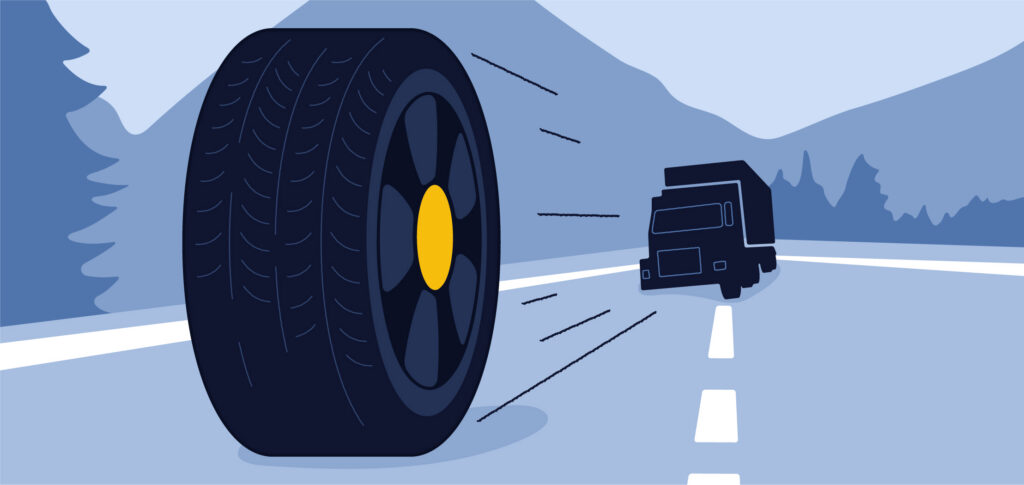
When an uninsured driver causes a wheel-off accident, other parties may also share the blame. These cases often involve failures that happened before the crash.
Vehicle owners are one possible source of liability. An owner may be responsible if they allowed an unsafe vehicle onto the road. If they knew the vehicle had loose wheels, bad tires, damaged studs, missing lug nuts, or recent repair problems, they may be at fault.
Employers may also be responsible in some cases. If the uninsured driver was working at the time of the crash, the employer may be responsible because the driver was acting on the company’s behalf. This can apply when a worker is driving as part of their job, making deliveries, hauling materials, transporting equipment, or running company errands.
Repair shops may also face liability. If a shop recently worked on the wheel, tire, brakes, suspension, axle, or hub, their work needs to be reviewed. Loose lug nuts, improper torque, missing parts, poor inspection, or careless installation can lead to a wheel separating from the vehicle.
Contractors and maintenance companies may also be involved. This can happen with commercial vehicles, trailers, work trucks, and fleets. If a company was paid to inspect or maintain the vehicle and failed to catch a dangerous condition, they may share responsibility.
In some cases, a defective part may be involved. A failed wheel, tire, stud, hub, or other component may raise questions about the manufacturer or distributor.
The main point here is simple. Don’t assume the uninsured driver is the only target.
Does Your Own Insurance Cover an Uninsured Driver’s Wheel-off Accident?
Your own insurance may help if you carry uninsured or underinsured motorist coverage. This coverage is often called UM/UIM coverage.
Uninsured motorist coverage may apply when the at-fault driver has no insurance. Underinsured motorist coverage may apply when the at-fault driver has insurance, but not enough to cover your losses.
In a wheel-off accident, UM/UIM coverage may help pay for medical bills, lost wages, pain and suffering, and other covered losses. The amount available depends on your policy limits, the type of coverage you bought, and the facts of the crash.
Some people don’t know they have this coverage until a lawyer reviews the policy. Others assume their insurance company will treat them fairly because they’ve paid for coverage for years.
What Damages Can You Recover When the Driver Was Uninsured?

After a wheel-off accident with an uninsured driver, you may still recover damages for the harm you suffered. The value of the claim depends on the injury, the evidence, and the available sources of recovery.
Medical bills are usually the first category people think about. Emergency care, ambulance charges, surgery, hospital stays, doctor visits, imaging, prescriptions, physical therapy, injections, and follow-up care can all become part of the claim.
Future medical care may also be considered. Some injuries don’t heal quickly. Some leave people needing more treatment months or years later. If doctors can explain the need for future care, those costs may be included.
Lost wages are another major part of many claims. If the wheel-off accident kept you from working, you may have a claim for the income you lost. If your injuries limit your ability to work in the future, the claim may also include reduced earning potential.
Pain and suffering can also be part of the recovery. That includes the physical pain, stress, discomfort, and daily disruption caused by the crash. A serious injury can affect sleep, movement, work, family life, and basic tasks that most people used to handle without thinking.
Property damage may also be included. A wheel-off accident can crush the front of a car, break glass, damage the frame, or total the vehicle. Personal items inside the vehicle may also be damaged.
In more severe cases, damages may include disfigurement, physical impairment, loss of normal life activities, and long-term limitations. If the crash resulted in a death, surviving family members may also have a wrongful death claim.
What if You Also Have No Insurance After a Wheel-off Accident?
Even if you don’t carry insurance yourself, you can still seek money after a wheel-off accident in Texas. Your right to recover is based on fault, not on whether you personally had coverage.
If someone else caused the crash, they can still be held responsible.
That can seem odd because insurance plays such a big role in accident claims. But insurance and fault aren’t the same thing. A person without insurance can still be injured by someone else’s negligence. And they can still bring a claim.
Your lack of insurance may limit your options. For example, you won’t have your own UM/UIM policy to rely on if you didn’t buy that coverage.
But it doesn’t automatically end your injury claim against the at-fault parties.
The bigger issue is finding out who can actually pay. If the other driver also had no insurance, the case may depend on whether another party is legally responsible. That could include a vehicle owner, employer, repair shop, contractor, maintenance company, or other party connected to the wheel-off accident.
What Evidence Helps When the Other Driver Was Uninsured?
Strong evidence is critical in a wheel-off accident case involving an uninsured driver. When there’s no insurance company for the at-fault driver, the case may depend even more on proving who else was involved and how the crash happened.
Photos and videos are a strong starting point. Pictures of the vehicles, the loose wheel, the roadway, skid marks, debris, injuries, and property damage can help show the force of the crash and the path of the wheel.
The vehicle itself may be the most important piece of evidence. Loose lug nuts, broken studs, worn parts, bad maintenance, or improper repairs may help explain why the wheel came off. To find out what went wrong, the vehicle needs to be preserved and inspected before anyone repairs, moves, or takes it apart.
That evidence can disappear quickly if no one steps in early.
Tow yards may release vehicles. Owners may repair them. Companies may put them back into service. Parts may be thrown away. Once that evidence is gone, it becomes much harder to prove what failed and why.
Witness names and contact information also matter. A witness may have seen the wheel wobbling before it came off. Someone may have seen the driver lose control. Another driver may have dashcam footage. A nearby business may have security video.
Police reports can help, too. Just know that they don’t always tell the whole story. Officers usually arrive after the crash. They may record what people said, where the vehicles ended up, and whether citations were issued. That’s useful, but a full legal claim usually requires more.
Medical records help prove the injury. They show when you sought treatment, what doctors found, and how the crash affected your body. Gaps in treatment can give insurance companies and defense lawyers room to argue, so getting care and following medical advice is important.
Expense records also help. Keep bills, receipts, repair estimates, prescription costs, pay stubs, and proof of missed work. These records highlight the financial side of the harm.
For commercial vehicles or work-related driving, business records may be key. Maintenance logs, driver schedules, repair invoices, inspection reports, training records, and dispatch data can show whether a company ignored safety.
A lawyer can send preservation letters to demand that key evidence be saved. That can be especially important when a business, employer, or repair shop may be involved.
The sooner evidence is protected, the harder it is for the other side to explain it away later.
Are There Deadlines to File Against an Uninsured Driver After a Wheel-off Accident?
Yes, Texas has strict deadlines for injury claims after a wheel-off accident. In many personal injury cases, the deadline is two years from the date of the crash.
That sounds like a long time, but it’s not.
A wheel-off accident case may require months of investigation. Your lawyer will need to identify the driver, confirm insurance status, inspect the vehicle, locate the wheel, review repair records, find witnesses, check for employer involvement, and review your own insurance coverage.
If there are multiple parties, each one needs to be investigated. If a repair shop or maintenance company was involved, records need to be requested and reviewed. If a commercial vehicle was involved, the evidence may be more complex.
Waiting too long gives the other side an advantage.
As time passes, the case gets harder to prove. Video evidence may be erased, vehicles may be repaired, parts may be thrown away, and witnesses may become harder to find. Plus, losing the wheel, lug nuts, studs, or repair records can make it much harder to show what actually went wrong.
Missing the filing deadline can mean losing your right to compensation completely. That sounds harsh, but courts take deadlines seriously.
There may also be insurance policy deadlines that come up much sooner than the lawsuit deadline. Your own insurer may require prompt notice. Some policies require cooperation, proof of loss, medical documentation, or other steps.
That’s why you shouldn’t wait until the two-year deadline is closing in.
The safer move is to get legal advice early. A lawyer can identify deadlines, send notices, and preserve evidence before your case is put at risk.
Can You Still Get Medical Care If the Other Driver Was Uninsured?
Yes, you may still be able to get medical care after a wheel-off accident even if the other driver had no insurance. The at-fault driver’s lack of insurance can make treatment harder to arrange, but it doesn’t have to stop you from getting the care you need.
Some people use health insurance for treatment. Others use personal injury protection, medical payments coverage, or other available benefits if they have them. Some providers may treat accident victims and wait to be paid from the case winnings later.
That arrangement is often referred to as treatment under a letter of protection.
A letter of protection doesn’t get you free medical treatment. It means that your medical provider agrees to wait for payment and be paid directly from your future settlement or jury verdict, instead of requiring payment up front. This can help injured people get care when they don’t yet have the money to pay out of pocket.
Talk to a lawyer to see if this is an option for you.
Why Is Hiring a Lawyer Critical When the Other Driver Had No Insurance?
A wheel-off accident involving an uninsured driver is one of the hardest cases to handle on your own. Things can get messy fast. Aside from the complexity of wheel-off claims, finding an alternative source of payment can be difficult. Most people don’t know how to trace other liable parties, review coverage, preserve evidence, or push back when everyone involved starts denying responsibility.
An experienced lawyer does.
A legal expert can dig into vehicle ownership, maintenance, repairs, vehicle history, company involvement, insurance policies, third-party fault, and more.
That takes time and skill. It also takes pressure.
People and companies don’t always hand over helpful information because you ask nicely. A repair shop may deny wrongdoing. A vehicle owner may claim they knew nothing. An employer may say the driver wasn’t on the clock. An insurer may say that the policy doesn’t apply.
To verify those claims and uncover the truth, a lawyer may send preservation letters, hire experts, review maintenance records, inspect the vehicle, file suit, take depositions, and force parties to answer questions under oath. They may also check people’s stories against records like photos, phone data, dispatch logs, and repair invoices.
In a wheel-off accident, technical evidence can be powerful. The pattern of damage, the condition of the lug nuts, the failure point, and the maintenance history can tell a story. But that story has to be uncovered before the evidence disappears.
A lawyer can also deal with your own insurer if UM/UIM coverage is available. That can reduce your risk of saying something that the insurer can use against you. It also puts the insurer on notice that the claim won’t be handled casually.
Trying to handle the case alone can leave you guessing at the worst possible time. You may not know which records matter, which deadlines are closing in, or whether a company, contractor, or vehicle owner can be held responsible.
The other side knows that.
That’s why legal help is so important in these cases. Not because every case needs a courtroom battle, but because uninsured driver cases require a careful look at every party linked to the incident.
A serious injury deserves more than a rushed answer from someone trying to limit the payout.
Contact Grossman Law Offices After Your Wheel-off Accident
If you or a loved one was hurt in a wheel-off accident where the other driver had no insurance, Grossman Law Offices is here to help. These cases are difficult, but we have the experience and resources to find and exhaust all possible sources of recovery.
For more than 35 years, Grossman Law Offices has handled serious accident cases in Texas, including wheel-off accident claims. We know what happens when people are badly hurt and the at-fault driver has no coverage. The situation can feel unfair because it is unfair. You were just going about your day when someone else’s poor choices left you with pain, bills, and more questions than answers.
Our job is to find out what happened, who was responsible, and how to fight for the compensation you deserve. That means looking past the uninsured driver when the facts call for it. It means reviewing vehicle ownership, work status, maintenance records, repair history, insurance policies, and everyone who may have played a role.
We don’t assume the case is over because the driver had no insurance. That’s too easy, and it lets too many people off the hook.
Several people, businesses, and policies may be tied to a crash. That could include an employer that put an unsafe vehicle on the road, a repair shop that made a mistake, or a vehicle owner who ignored clear warning signs. If your own UM/UIM coverage applies, that claim also needs to be handled carefully.
You shouldn’t have to figure all of this out while dealing with pain, medical appointments, missed work, and pressure from insurance companies.
The sooner you contact a law firm, the sooner important evidence can be protected. In wheel-off accident cases, that can make a real difference. The wheel, vehicle, parts, repair records, and witness information may not be available for long.
If you’re unsure whether you have a case, that’s exactly why you should ask. Don’t take the uninsured driver’s word for it, and don’t let an insurance adjuster’s quick denial decide what happens next. There may still be a path forward, even if the other driver broke the law by driving without coverage.
Let an attorney help you find out whether compensation is still possible, so you’re not left carrying the consequences of someone else’s mistake alone.
When you’re ready to discuss your wheel-off accident case, reach out to Grossman Law Offices. We can step in before the excuses start, deal with the insurance issues, and make sure the right people answer for what happened.

 Lláma
Lláma  Correo
  Mensaje