
Gray County, TX — March 14, 2025, William McKaig and Richene McKaig were killed in a truck accident at about 11:40 a.m. on eastbound Interstate 40.
Authorities said a 2018 Kia Soul crashed into the back of a disabled 2014 Kenworth semi-truck that had been involved in an earlier accident as dirt and smoke from a nearby wildfire limited visibility. The Kia subsequently was rear-ended by a 2018 Freightliner semi-truck.
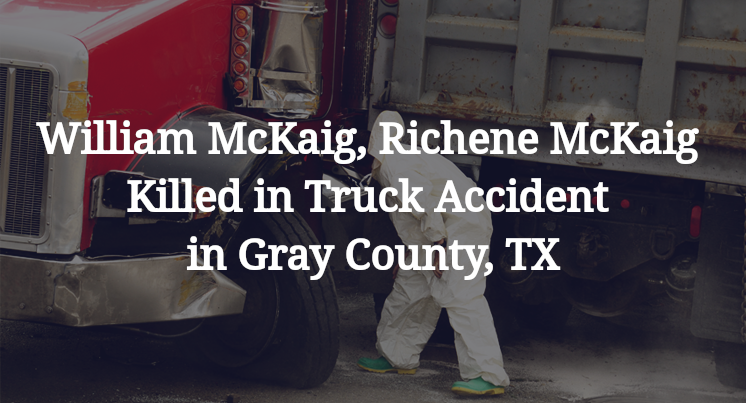
Kia driver William McKaig, 67, and passenger Richene McKaig, 73, died at the scene of the crash west of Allenreed, according to authorities.
No other injuries were reported.
Authorities have not released any additional information about the Gray County crash at this time. The accident is still under investigation.
Commentary by Attorney Michael Grossman
Crashes involving poor visibility from environmental factors raise serious concerns about whether drivers had enough time to react, whether proper warnings were in place and whether road closures should have been considered. In this case, reports indicate that a Kia Soul crashed into the back of a disabled semi-truck, then was hit by another semi-truck on Interstate 40 while visibility was reduced by smoke and dirt from a wildfire. A full investigation should determine whether this was due to driver error, the unpredictable conditions or a failure to implement necessary safety precautions.
One of the first questions investigators should answer is whether drivers were given enough warning about the hazardous visibility conditions. Wildfires can spread rapidly, creating sudden, dense smoke that limits visibility in seconds. Were there road signs, highway patrol alerts or other warning systems in place to advise drivers of the low-visibility conditions? If not, authorities should examine whether better communication or earlier traffic control measures — such as speed reductions or temporary road closures — could have prevented the crash.
Another key factor is whether the disabled semi-truck was properly marked. A truck that has been involved in an earlier accident presents a serious hazard, especially in poor visibility. Were its hazard lights on? Did it have reflective warning triangles placed behind it, as required by federal regulations? If the truck was not properly marked or if the low visibility made it impossible for the Kia driver to see it in time, that should be closely examined.
Speed and following distance should also be considered. In low-visibility situations, drivers are expected to slow down and increase their following distance. Were the drivers involved adjusting their speed appropriately for the conditions? Reviewing black box data from the vehicles, particularly the second semi-truck that rear-ended the Kia, could help determine whether excessive speed played a role.
At this stage, there isn’t enough public information to determine exactly what led to this crash. But if authorities focus only on the sequence of collisions without investigating why the disabled truck was struck in the first place — whether due to lack of visibility warnings, inadequate hazard markings or excessive speeds — they risk missing key details. A thorough investigation should take all possible factors into account to ensure a full understanding of what went wrong and whether better safety measures could prevent similar crashes in the future.

 call us
  Email Us
  Text us