
Sharonville, OH — July 9, 2025, William Loebker was killed in a truck accident at about 12:30 p.m. on the ramp from Interstate 75 to Interstate 275.
Authorities said a 2019 Kawasaki Ninja 600 motorcycle collided with a semi-truck as it merged onto the ramp for eastbound I-275.
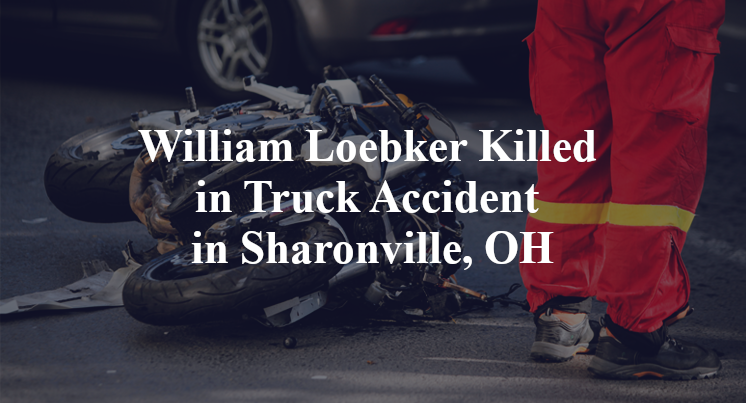
Motorcyclist William Loebker, 19, of Milford was pronounced dead at the scene of the crash, according to authorities.
No other injuries were reported.
Authorities have not released any additional information about the Hamilton County crash at this time. The accident is still under investigation.
Commentary by Attorney Michael Grossman
When people hear about a fatal collision between a motorcycle and a semi-truck on a highway ramp, like the one reported in Sharonville, they’re often left wondering: What actually happened? Whose actions led to the crash? And can investigators really get to the bottom of it?
Those are the right questions to ask because without clear answers, there’s a risk that critical details might be overlooked, especially in crashes involving large commercial vehicles. In this case, it’s been reported that a 19-year-old motorcyclist collided with a semi-truck as the truck was merging onto the ramp for eastbound I-275. But that raises more questions than it answers.
Was the truck already on the ramp and attempting to merge into traffic? Or was it entering the ramp and crossing into the motorcycle’s path? Did the motorcycle attempt to pass the truck? Depending on the direction and timing of movement from each vehicle, the question of fault could look very different.
Unfortunately, police reports and news summaries rarely provide enough detail to sort that out. That’s why serious investigations into commercial truck crashes typically go far beyond what appears in public statements.
For example, a thorough investigation would look at the truck’s electronic control module, basically its “black box,” to determine its speed, braking activity and whether it was signaling a lane change. It would also examine any in-cab video, GPS tracking data and the driver’s phone records to rule out distraction.
Even something as basic as dash cam footage, if available from the truck or nearby vehicles, could shed light on who was where and when. Without that kind of hard evidence, speculation will fill the void, and that helps no one.
Another key question: Was the truck driver properly trained to handle tight merges involving smaller, faster vehicles like motorcycles? In past cases I’ve handled, I’ve seen how weak driver evaluations or poor training programs can lead to fatal lapses in judgment behind the wheel. If the company that hired this driver skipped any of those steps, that’s something investigators, and potentially a jury, need to know.
And then there’s the issue of timing. This crash happened in the middle of the day. That makes things like visibility and traffic flow easier to assess using surveillance footage, if any exists nearby. It’s also the kind of crash where independent investigators, working outside of law enforcement, can add tremendous value by interviewing witnesses quickly and preserving physical evidence before it disappears.
Key Takeaways:
- It’s unclear from current reports whether the truck was merging onto or already on the ramp, which matters when determining fault.
- Investigators will need to examine ECM data, dash cam footage and cell phone records to understand the truck driver’s actions leading up to the crash.
- Driver training and hiring policies may be relevant if the trucker failed to account for nearby vehicles like motorcycles during merging.
- Independent investigations often uncover critical evidence that police reports do not.
- Getting to the truth requires more than assuming one party was at fault; it requires evidence.

 call us
  Email Us
  Text us