
Franklin County, WA — May 31, 2025, one person was killed as the result of a truck pile-up accident at around 6:30 p.m. along US Highway 395.
Initial details from the Washington State Patrol say that the crash took place north of Connell during reported high winds and dusty, smoky conditions.
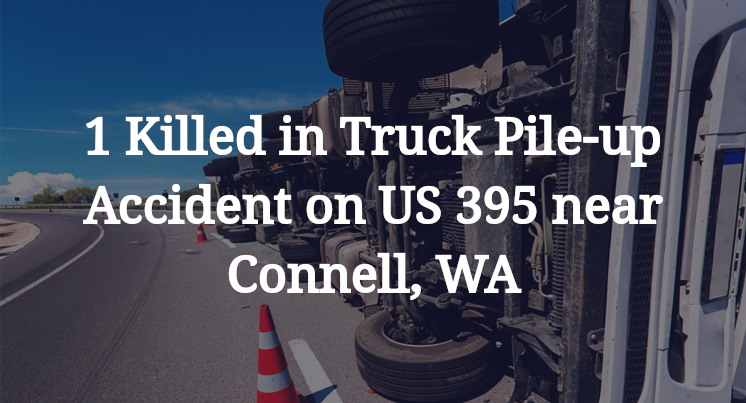
Authorities say traffic was moving along northbound lanes of the highway when two semi-trucks collided. A chain reaction occurred, during which a van and multiple other vehicles collided. As a result, the van driver reportedly was killed.
Other injuries were reported, but authorities say only one of the victims was transported to a hospital. Additional details about the crash are unavailable.
Commentary by Attorney Michael Grossman
When multiple semi-trucks and other vehicles collide in low-visibility conditions, the instinct is to call it a freak accident—something caused by the weather and nothing more. But crashes like this often reveal just how fragile the system becomes when large commercial vehicles are moving fast in unpredictable environments. High winds and poor visibility may set the stage, but how drivers and companies prepare for and respond to those conditions is what ultimately determines the outcome.
Pile-ups involving commercial trucks are especially dangerous because of the weight, speed, and stopping distance involved. Once one truck loses control or fails to react in time, the margin for error disappears. That’s why these incidents require more than just a surface-level explanation. It’s not enough to say the weather was bad—we have to ask: were drivers operating responsibly given the conditions? Were they properly trained to handle these situations? And, did the companies that put them on the road equip them to make safe decisions?
In cases I’ve handled, we’ve found that what looks like a weather-related crash often has just as much to do with human choices—like ignoring visibility warnings, traveling too fast for the conditions, or failing to maintain proper following distance. In some instances, trucking companies pressure drivers to keep moving on schedule even when conditions are clearly unsafe.
The chain reaction in a crash like this doesn’t just happen on the road—it starts long before, with policies, priorities, and procedures. That’s why it’s critical for investigators to examine more than just the wreckage. They need to look at black box data, driver logs, communication between dispatchers and drivers, and even internal company safety protocols. Without that, the real causes often remain hidden.
Key Takeaways
- Chain-reaction crashes involving commercial trucks in poor weather often involve a mix of environmental and human factors.
- Weather conditions don’t remove responsibility—drivers and companies must adjust behavior based on risk.
- Company oversight, including training and operational decisions, can heavily influence how drivers respond to dangerous conditions.
- Investigations should focus on black box data, driver logs, and internal safety policies—not just road conditions.
- True accountability requires examining how the crash could have been prevented, not just what happened in the moment.

 call us
  Email Us
  Text us