
Stark County, ND — January 27, 2025, one person was killed and six others were injured in a truck accident at about 7:50 p.m. on Interstate 94.
Authorities said a westbound 2013 Kia Optima was slowing down near mile marker 80 when it was rear-ended by a 2025 Freightliner semi-truck.
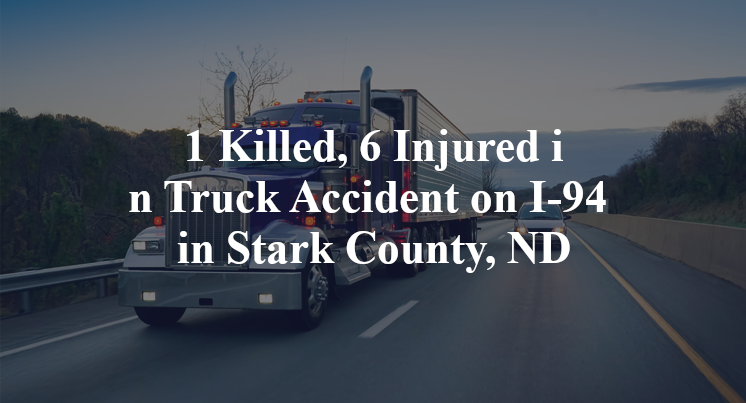
A 33-year-old woman who was a passenger in the car was pronounced dead at the scene of the crash near Gladstone, according to authorities, while six others suffered serious injuries. Their names have not been made public at this time.
The car was driven by a 30-year-old man, authorities said. His passengers included a 34-year-old man, a 31-year-old woman and four children under 8. Three of the children were injured.
The truck driver was not injured.
Authorities have not released any additional information about the crash at this point.
The accident is still being investigated.
Commentary by Attorney Michael Grossman
Rear-end collisions involving semi-trucks and passenger vehicles often raise important questions about visibility, reaction time, and whether all safety measures were followed. The crash in Stark County is no exception. A proper investigation must go beyond the crash scene to determine what led to this devastating outcome.
A key issue is why the Freightliner failed to stop in time. Commercial truck drivers are trained to anticipate and respond to slowing traffic, and federal regulations require them to maintain safe following distances. Investigators should examine whether the truck driver was distracted, fatigued or impaired at the time of the crash. Reviewing GPS data, in-cab cameras and cell phone records could provide critical insight into whether the driver was paying attention and reacting appropriately to road conditions.
Another important factor is whether road or visibility conditions played a role. Was the crash site well-lit? Were weather conditions a factor? While external conditions can contribute to a crash, professional drivers are expected to adjust their driving accordingly. If visibility was limited, the question then becomes whether the driver was operating at a safe speed for the conditions.
Investigators should also assess the truck’s braking system and maintenance history. A mechanical failure, such as brake issues, could have prevented the driver from stopping in time. Reviewing inspection records and data from the truck’s electronic control module (ECM) could help determine whether a mechanical failure contributed to the crash.
Ultimately, determining what caused this collision requires a thorough review of all available evidence. The goal isn’t just to identify what happened, but to understand whether any failures — by the driver, the trucking company or other parties — contributed to an outcome that might have been preventable.

 call us
  Email Us
  Text us