
Seneca, MO — May 15, 2025, two people were injured in a single-vehicle truck accident at approximately 4:00 p.m. along U.S. Highway 43.
According to authorities, two people were traveling in an 18-wheeler hauling a trailer loaded with axles in the vicinity of the Washington Avenue and State Highway 43 intersection when the accident took place.
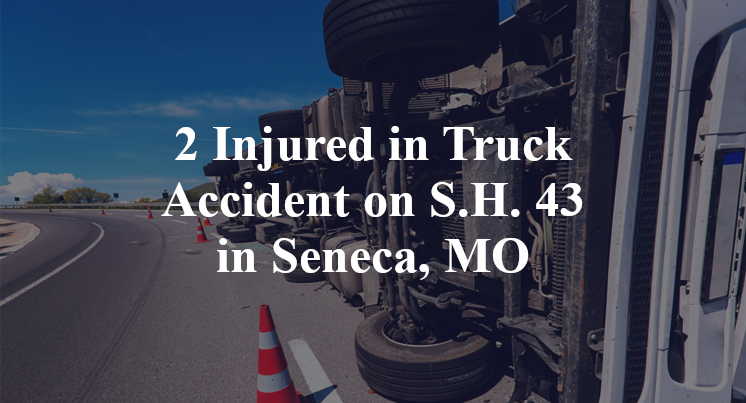
Preliminary reports state that, for as yet unknown reasons, the 18-wheeler was involved in a single-vehicle collision in which it apparently overturned. The two people who had been inside the truck at the time of the accident reportedly sustained injuries of unknown severity, though they were described as having been non-life-threatening. Additional details pertaining to this incident—including the identities of the victims—are not available at this point in time. The investigation is currently ongoing.
Commentary by Attorney Michael Grossman
In my 30 years of handling truck accident cases, I’ve learned that when a fully loaded 18-wheeler overturns—especially in a single-vehicle crash—the most important legal question is why did the driver lose control in the first place? Trucks don’t just tip over on their own. When they do, it’s often a sign that something went wrong either with the operation of the vehicle, the condition of the load, or the preparation that should have occurred long before the wheels hit the road.
According to early reports, the truck in question was hauling a trailer loaded with axles when it overturned near the intersection of Washington Avenue and Highway 43. That detail matters, because cargo like axles is both heavy and compact—making it easy to improperly distribute, especially if time or care is lacking during the loading process. An unbalanced or insecure load can shift during a turn, curve, or sudden maneuver, causing even the most experienced driver to lose control. In my experience, I’ve seen many rollovers caused not by reckless driving, but by poor loading practices that went unchecked by the trucking company or the shipper.
It’s also critical to look at the truck’s speed and handling leading up to the crash. Was the driver going too fast through a curve or intersection? Were they avoiding another hazard on the road? Was the vehicle’s suspension or braking system in poor condition? These are all factors that can contribute to a rollover, and they often go overlooked unless someone digs into the vehicle’s inspection records, telematics data, and the driver’s hours-of-service logs.
And if this truck was operating as part of a commercial carrier—as most 18-wheelers are—then the role of the company has to be investigated. Was the driver trained to handle the type of load they were hauling? Did the company monitor the truck’s condition through routine inspections? Did they verify that the cargo was properly secured before the trip began? I’ve handled too many cases where poor oversight from a carrier put drivers and everyone else on the road in harm’s way.
Getting to the bottom of a crash like this means asking the right questions and refusing to stop at surface-level explanations. Serious wrecks deserve serious investigation, not assumptions. Understanding how the truck tipped, whether the load contributed, and whether the company behind the truck fulfilled its responsibilities is key to figuring out what might have happened. Getting clear answers to these questions is the least that can be done to help those affected find the clarity and closure they deserve.

 call us
  Email Us
  Text us