
San Antonio, TX — April 16, 2025, two people were injured following a multi-vehicle truck accident shortly before 9:45 a.m. along Interstate Highway 35.
According to authorities, the accident took place at the I.H. 35 and Eisenhauer Road intersection between two passenger vehicles and an 18-wheeler.
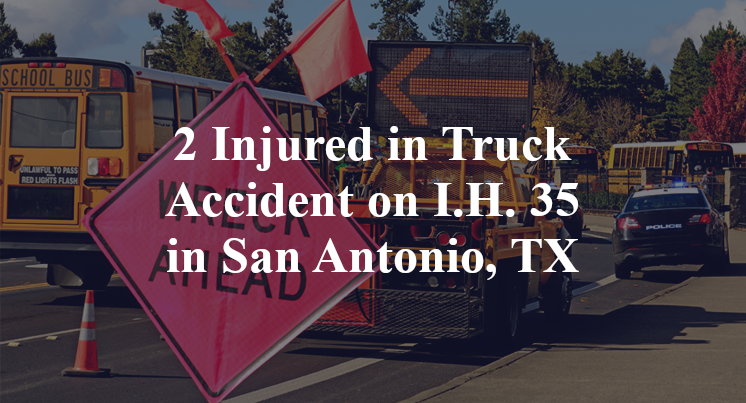
Officials indicate that, for as yet unknown reasons, one of the involved vehicles neglected to stop for a red light, resulting in the crash. One person from one of the passenger vehicles—a Subaru—reportedly suffered serious injuries over the course of the accident. The person who was behind the wheel of the 18-wheeler sustained minor injuries, as well, according to reports. They were each transported to local medical facilities by EMS in order to receive necessary treatment. Additional details pertaining to this incident—including the identities of the victims—are not available at this point in time. The investigation is currently ongoing.
Commentary by Attorney Michael Grossman
In my experience, crashes involving commercial trucks at intersections almost always come down to timing and visibility—and whether the people involved had a fair chance to avoid what happened. When someone runs a red light at an intersection, the risk of a serious multi-vehicle crash increases dramatically. Add an 18-wheeler into the equation, and even a momentary lapse can lead to long-lasting consequences for everyone involved.
What’s not yet clear in this case is which vehicle failed to stop for the red light. But regardless of who made the initial mistake, the 18-wheeler’s role in the crash still needs to be fully understood. Was the truck entering the intersection on a green light, or already in motion when the signal changed? Did the driver have time to brake or maneuver safely? These are not just technical questions—they go to the heart of how much responsibility, if any, lies with the truck driver or the company that put them on the road that morning.
It’s also important to consider how the truck was being operated. Was it following at a safe distance? Traveling at an appropriate speed for city traffic? In intersection crashes, the ability of a commercial driver to recognize a developing hazard and respond appropriately can mean the difference between a minor wreck and a life-altering one. If there were delays in reaction or equipment issues—brakes, steering, or even a distracted moment—that could shift the analysis of who’s at fault.
If the truck was operating under a commercial carrier, that company’s practices deserve attention. Was the driver trained to handle high-traffic intersections safely? Was the vehicle equipped with dashcams or braking assistance systems that could help clarify what happened? And were company policies encouraging safe driving, or putting drivers under pressure to stay on schedule regardless of traffic conditions? These questions come up time and again in intersection collisions, where split-second decisions are shaped by hours of prior planning—or lack thereof.
From where I sit, a multi-vehicle crash involving a red-light violation and a commercial truck is exactly the kind of incident that demands more than a surface-level explanation. It’s not enough to say a signal was missed. We need to understand what led up to that moment, how each driver responded, and whether anything could have been done to prevent the outcome. Only then can the right parties be held accountable and those affected by the wreck receive the clarity and closure they deserve.

 call us
  Email Us
  Text us