
Sacramento, CA — July 24, 2025, one person was killed in a truck accident at about 8:30 a.m. on State Route 99 near the city limits.
Authorities said a Toyota Prius rear-ended a semi-truck near Elkhorn Boulevard, causing it to get stuck under the larger vehicle’s trailer.
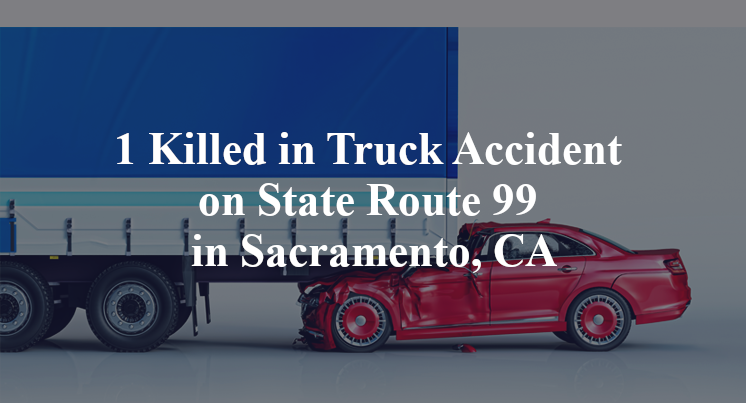
The driver of the Prius, whose name has not been made public yet, was pronounced dead after being extricated from the vehicle, according to authorities.
Authorities have not released any additional information about the Sacramento County crash at this time.
Commentary by Attorney Michael Grossman
When a car ends up wedged underneath the trailer of an 18-wheeler, most people immediately want to know: How does something like that even happen? Was the truck moving at the time? Was it stopped in traffic? Was it changing lanes or turning? None of those details are clear from the initial reports, but each scenario points to a very different chain of events, and potentially different parties who may be at fault.
What we do know is that the car reportedly rear-ended the trailer of a semi-truck on State Route 99. That might sound like an open-and-shut case, but in my experience handling these kinds of crashes, what’s reported up front is rarely the whole story. Depending on whether the truck was moving or stopped, different questions arise. If it was stopped, was it stopped unexpectedly or in an active lane of traffic? If it was moving, was it traveling at an appropriate speed and in the correct lane? And in either case, was the rear of the trailer properly marked and lit?
The fact that the smaller vehicle got lodged underneath the trailer suggests a possible underride situation, something that typically happens when a car slides under the back of a trailer because the bottom of the trailer sits higher than the front of most passenger vehicles. In those cases, even low-speed impacts can be deadly.
That raises another important question: Was the trailer equipped with a properly maintained underride guard? That’s a metal bar intended to prevent exactly this kind of scenario. Whether it was there and functioning as required isn’t just a regulatory issue. It can speak directly to whether the fatal outcome might have been avoidable.
To get to the truth, investigators should secure the truck’s engine control module (the “black box”), dashcam footage if available and any GPS or telematics data showing the truck’s movements leading up to the crash. Cell phone records and in-cab cameras can also help determine whether the truck driver was distracted. And of course, examining the condition and lighting of the trailer itself, especially in the early morning light, will be key.
Ultimately, these kinds of investigations are never as simple as they first appear. In one case I handled, it turned out a truck that was stopped in traffic hadn’t activated its flashers or properly illuminated its trailer, which made it nearly invisible in the early morning fog. The driver of the car that struck it never had a chance.
Without more details, we can’t yet say what caused this wreck or who should be held accountable. But that’s exactly why an independent investigation, one that goes far beyond a police report, is so important.
Key Takeaways:
- It’s unclear whether the truck was stopped or moving at the time of the crash, which is crucial to understanding fault.
- A lodged vehicle suggests a possible underride collision; proper trailer lighting and underride guards will be key pieces of evidence.
- Determining fault requires ECM data, dashcam footage, lighting inspections and truck driver activity logs.
- Rear-end crashes involving trucks are not always the smaller vehicle’s fault; context matters.
- A full investigation will reveal whether this death was preventable and who, if anyone, failed to take proper precautions.

 call us
  Email Us
  Text us