
Palm Beach, FL — July 24, 2025, at least one person was killed due to a truck accident shortly after 6:30 a.m. along Interstate Highway 95.
According to authorities, the accident took place on the off-ramp from I.H. 95 onto Palm Beach Lakes Boulevard.
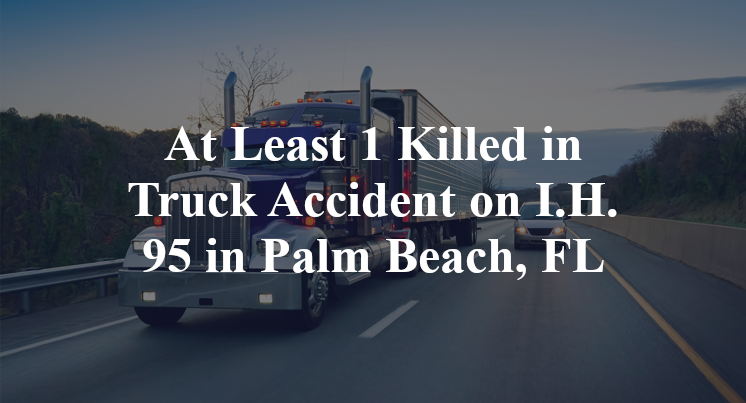
Details surrounding the accident remain scarce; however, preliminary reports state that an 18-wheeler was involved in the wreck. At least one person has lost their life as a result of this crash. Additional information pertaining to this incident—including the identity(s) of the victim(s)—is not available at this point in time. The investigation is currently ongoing.
Commentary by Attorney Michael Grossman
When a fatal crash happens on an interstate off-ramp involving an 18-wheeler, the key question is usually how the truck entered or exited the ramp—and whether it did so in a controlled, lawful way. Ramps are designed to transition vehicles safely between highway speeds and local roads, but when something goes wrong in that short stretch, the consequences can be severe.
At this point, we don’t know who was killed or how the crash unfolded. Was the 18-wheeler coming off the highway too fast? Did it lose control on the curve? Or did another vehicle enter its path unexpectedly? Depending on the answer, very different investigative paths open up.
Crashes like this often raise scenarios where a truck comes down a ramp too fast to safely handle the exit. That can happen due to brake failure, fatigue, distraction, or simple unfamiliarity with the area—especially if the driver is following GPS directions that don’t match the road’s design. In other cases, a car might suddenly cut in front of the truck near the bottom of the ramp, leaving little or no time to react. Both possibilities are plausible, but only a detailed investigation will show what really happened.
The most useful data often comes from the truck itself. The engine control module (ECM) can show how fast the vehicle was going, whether the brakes were engaged, and how long the driver had been operating before the crash. In-cab video can also help determine whether the driver was distracted, drowsy, or reacting to a sudden hazard. And if GPS records show a last-minute rerouting or missed turn, that might explain why a driver was under pressure to make a risky maneuver.
What’s especially challenging about off-ramp crashes is that they’re often dismissed as “just bad luck.” But I’ve seen many cases where poor signage, slick pavement, or bad routing information all played a role. That’s why it’s important not to assume this was unavoidable. The cause is out there—what matters now is making sure someone takes the time to find it.
Key Takeaways:
- The crash occurred on an off-ramp, raising questions about speed, control, and driver behavior during the exit.
- Possible causes include brake issues, driver fatigue, distraction, or a sudden hazard from another vehicle.
- ECM data, dash cams, and GPS logs will be key to reconstructing what happened.
- Road design, signage, and surface conditions should also be evaluated as contributing factors.
- Prompt evidence collection is critical to determine what led to the fatal outcome.

 call us
  Email Us
  Text us