
San Bernardino County, CA — June 15, 2025, one person was killed in a truck accident at about 10:50 a.m. on westbound Interstate 40 outside of Needles.
Authorities said two semi-trucks, one of them a UPS truck, collided near the California Agricultural Inspection Station, with one truck becoming lodged under the other.
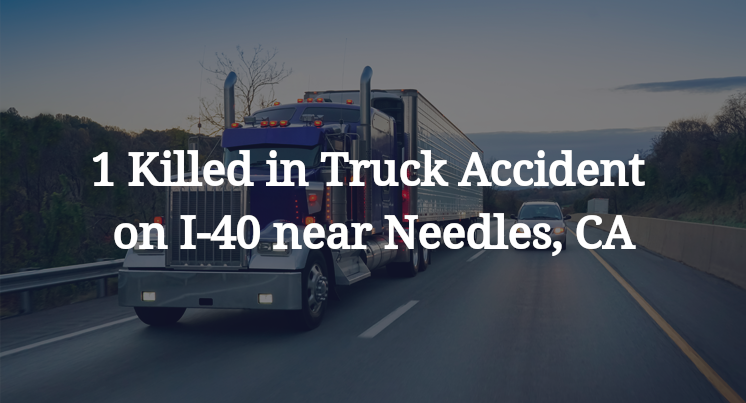
One person died in the crash, according to authorities, but that person’s name or role in the accident hasn’t been made public yet.
Authorities have not released any additional information about the San Bernardino County crash at this time. The accident is still under investigation.
Commentary by Attorney Michael Grossman
When people hear that one semi-truck somehow ended up lodged underneath another on I-40 near Needles, the natural response is: How does something like that even happen? It’s a fair question, and right now, there’s not enough public information to answer it. That’s a problem, because the difference between a preventable mistake and an unforeseeable accident comes down to details that only a thorough investigation can reveal.
We know a UPS truck was involved, and that one of the trucks somehow ended up underneath the other. That strongly suggests a scenario where one vehicle was either stopped or moving much more slowly than the other. But we don’t yet know whether one truck was already stationary, possibly at the California Agricultural Inspection Station, or whether both trucks were in motion at the time. Depending on whether one truck was stopped or moving slowly, different legal questions arise.
For example:
- If one truck had come to a stop (say, at the inspection point), why did the other fail to notice and avoid it?
- If both were moving, was one attempting a dangerous lane change or braking abruptly?
None of that is clear yet. But we do know from experience that answers don’t come from assumptions; they come from evidence. That means pulling engine control module (ECM) data to see vehicle speeds and braking. It means reviewing dash cam and in-cab footage to understand each driver’s actions. It may even require cell phone records to rule out distraction.
UPS, like many major carriers, typically has access to advanced monitoring equipment. That data should already exist. But whether it’s reviewed impartially and shared with the public is another matter entirely. When a fatal crash occurs, especially one involving overlapping trucks, investigators must look closely at not just what happened, but why it was allowed to happen.
Was one of the drivers fatigued? Was the vehicle properly maintained? Were warning systems ignored or malfunctioning? Those are the kinds of questions that separate a bad outcome from a negligent one.
And it’s not just the drivers. The trucking companies’ role can’t be overlooked. Did they rush a delivery schedule? Were they lax in hiring or training? I’ve seen plenty of cases where the driver made a bad decision, but it was a company’s blind eye to risk that made the crash inevitable.
Until more facts come to light, all we can say is that someone lost their life, and that alone demands real scrutiny. Families deserve more than vague updates; they deserve answers grounded in verifiable fact.
Key Takeaways:
- It’s unclear whether one truck was stopped or both were in motion, which affects how responsibility is assessed.
- Critical evidence — ECM data, dash cams and cell phone records — will be key to reconstructing the crash.
- UPS and any other involved company must be scrutinized for training, oversight and delivery practices.
- Responsibility may lie with multiple parties, not just the drivers.
- Getting to the truth requires a full independent investigation, not assumptions.

 call us
  Email Us
  Text us