
Live Oak, CA — December 18, 2025, three people were injured in a truck accident at about 3:15 p.m. on State Route 99/Golden State Highway.
Authorities said a semi-truck crashed into a Subaru that was stopped in traffic near Morse Road in Sutter County. Three other vehicles were hit in the aftermath of the initial collision.
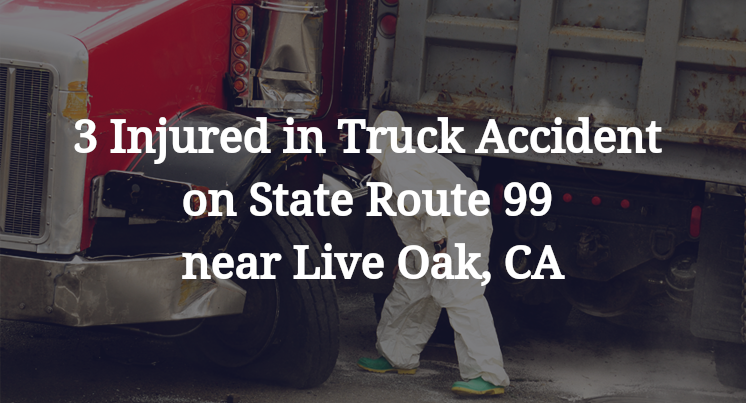
The 50-year-old woman who was driving the Subaru was transported an area hospital with moderate injuries, according to authorities. A 43-year-old man and a 29-year-old woman from other vehicles suffered minor injuries in the crash.
None of the crash victims have been named at this point.
Authorities have not released any more information about the crash.
The accident is still under investigation.
Commentary by Attorney Michael Grossman
This crash highlights the dangers of rear-end collisions involving semi-trucks, particularly in situations where vehicles are stopped in traffic. These incidents raise critical questions about the actions of the truck driver, the condition of the vehicle, and the adequacy of safety measures on the road.
The semi-truck driver’s role in initiating the collision is central to understanding the crash. Was the driver using a phone or otherwise distracted? Obtaining cell phone records and reviewing in-cab footage, if available, will be essential. The truck’s engine control module (ECM) can provide data on speed and braking patterns before the crash. Investigators should examine hours-of-service logs and conduct toxicology tests to rule out violations of federal trucking regulations or driver impairment.
Understanding the context of stopped traffic near Morse Road is critical. Was the stopped traffic adequately visible to the truck driver? Were there warning signs or signals indicating congestion ahead Was the traffic stopped suddenly due to an obstruction or other issue, leaving the driver insufficient time to react?
Mechanical issues could also have contributed to the crash. Were the truck’s brakes in good working condition, or did a maintenance lapse reduce their effectiveness? An improperly secured or unbalanced load can extend stopping distances and hinder control, potentially exacerbating the collision.
Chain-reaction crashes often amplify the damage and injuries. Did the Subaru absorb the initial impact, or did the semi-truck strike multiple vehicles simultaneously? Were any of the other vehicles stopped or moving at the time, and did their positioning affect the crash’s severity?
If the truck driver is found to have been negligent—whether by distraction, fatigue, or mechanical failure—their employer could share liability under vicarious liability principles. Additionally, the trucking company might face direct liability for inadequate driver training or oversight, or mechanical issues stemming from poor maintenance practices.
California’s comparative negligence law allows for fault to be apportioned among all involved parties. For example, if the stopped traffic was due to a sudden obstruction that contributed to the collision, liability might be shared among multiple entities.
This crash underscores the inherent risks of operating semi-trucks in congested traffic conditions. Investigating the driver’s actions, the condition of the truck, and the traffic environment will be critical to determining fault and preventing similar crashes in the future. For the injured parties, understanding the full scope of what happened is essential to ensuring accountability and fostering improvements in road safety practices.

 call us
  Email Us
  Text us