
Jacksonville, FL — June 30, 2025, at least one person was killed due to a truck accident at approximately 6:45 a.m. along Interstate Highway 295.
According to authorities, the accident took place in the southbound lanes of I.H. 295 on the Henry H Buckman bridge.
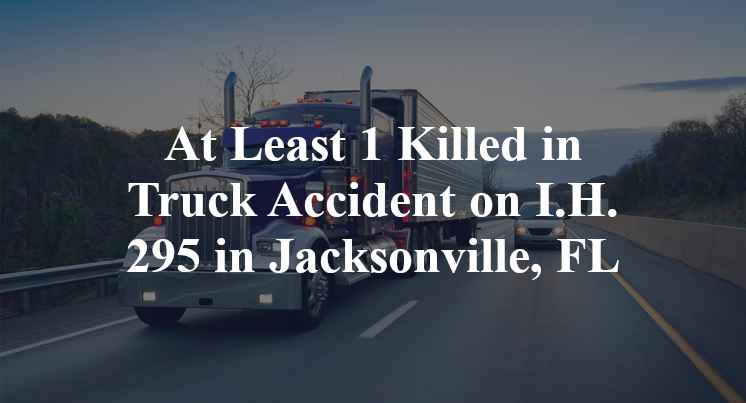
Details surrounding the accident remain scarce. Preliminary reports state that, for as yet unknown reasons, a collision took place between an 18-wheeler and a truck.
At least person reportedly lost their life as a result of the wreck. The number of people who were injured, if any, has not been reported.
Additional details pertaining to this incident are not available at this point in time. The investigation is currently ongoing.
Commentary by Attorney Michael Grossman
When a crash occurs on a major bridge during morning traffic and ends with someone losing their life, it immediately raises serious questions—not just about how it happened, but whether it could have been prevented. At this point, very little has been made public about the collision on the Buckman Bridge, but that doesn’t mean the legal questions aren’t already taking shape.
First and foremost: what caused the two trucks to collide? If one vehicle merged unsafely, braked abruptly, or drifted out of its lane, then fault may fall squarely on that driver. But without reliable facts—like dash cam footage, black box data, and eyewitness statements—there’s no way to assess what really went wrong. In cases I’ve handled involving bridge crashes, even a momentary lapse in judgment can leave both drivers with no room to react and nowhere to go.
Then there’s the location. Bridges like the Buckman don’t allow for shoulder access or wide recovery zones. That means any impact can become more severe simply because drivers have fewer options to avoid it. If one vehicle stalled, swerved, or slowed unexpectedly, even a well-trained commercial driver may have had no chance to respond in time. Investigators should already be examining the spacing between vehicles, speed at the time of impact, and any environmental conditions—rain, sun glare, congestion—that may have influenced visibility or control.
It’s also worth considering whether either vehicle had mechanical issues that contributed to the crash. I’ve seen multiple cases where a steering failure, worn tires, or faulty trailer connections played a hidden but critical role. Without a full inspection, it’s easy for those contributing factors to get overlooked.
In short, what matters now is not just identifying who collided with whom, but why this happened on a busy stretch of interstate where professional drivers are expected to maintain control—even in tight conditions.
Key Takeaways
- The cause of the fatal crash on the Buckman Bridge is still unknown, but multiple investigative threads should be pursued.
- Bridge conditions limit evasive options, which can magnify the consequences of even small errors or mechanical failures.
- Black box data, dash cam footage, and eyewitness accounts will be key to reconstructing the sequence of events.
- Both driver actions and vehicle condition must be scrutinized to determine whether the crash was preventable.
- A full investigation is necessary to move beyond speculation and determine where responsibility truly lies.

 call us
  Email Us
  Text us