

Houston, TX — May 12, 2025, one person was killed following a truck accident at sometime in the afternoon along East Freeway (I.H. 10).
According to authorities, at least two people were traveling in a westbound Chevrolet Silverado pickup truck on I.H. 10 behind a box truck in the vicinity of Beltway 8 when the accident took place.
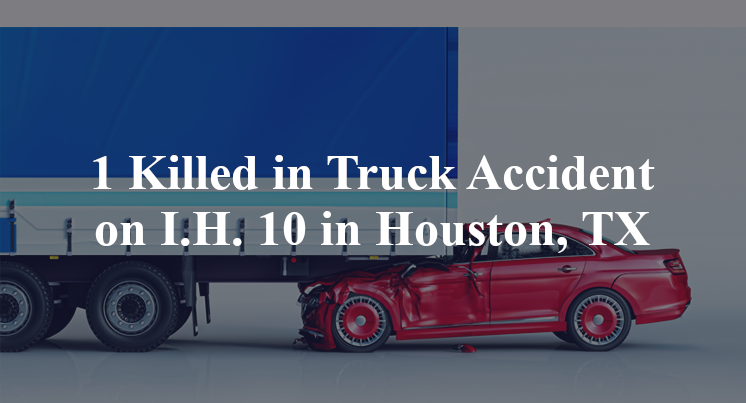
Officials indicate that the box truck began experiencing engine problems of some kind that caused it to decelerate significantly. Despite attempts by the pickup to swerve and avoid a collision with the truck, a collision still took place between the pickup truck and the box truck.
The person who had been the front-seat passenger in the pickup truck reportedly suffered fatal injuries due to the crash. The person who had been behind the wheel of the Silverado was transported to a medical facility by EMS, though it is unclear whether or not they were injured, as well. Additional details pertaining to this incident—including the identities of the victims—are not available at this point in time. The investigation is currently ongoing.
Commentary by Attorney Michael Grossman
In my 30 years of litigating commercial vehicle cases, I’ve seen that rear-end collisions—especially those involving a stalled or slowing truck—are rarely as straightforward as they might appear. When a box truck abruptly loses speed on a major highway like I-10 and a pickup behind it is unable to avoid a fatal crash, the question isn’t simply who hit whom. The real issue is whether the truck should have been in that position to begin with, and what actions—if any—were taken to prevent the collision once it was.
Engine problems don’t strike out of nowhere. When a truck slows to a crawl in high-speed traffic, it creates an immediate hazard, and the law expects commercial drivers and their employers to be prepared for those kinds of emergencies. That includes using hazard lights, pulling off the roadway as quickly and safely as possible, and maintaining equipment to prevent breakdowns in the first place. If the truck’s deceleration happened suddenly and without any warning to surrounding drivers, that puts its operator—and potentially the company that owns it—under serious scrutiny.
It’s also critical to examine what condition the truck was in before the crash. Was the vehicle overdue for service? Were there known mechanical issues that had been ignored? Did the company cut corners on maintenance or delay repairs to keep the truck in rotation longer than it should’ve been? I’ve seen too many cases where trucks were sent out in questionable condition—only for the consequences to show up in the form of a wreck that could have been prevented.
And even beyond the mechanical failure, the response matters. Did the driver react appropriately when the engine started failing? Did they make an effort to reach the shoulder or alert other drivers with emergency signals? A commercial driver is trained to recognize and respond to mechanical issues quickly—not just for their own safety, but for everyone else on the road. A failure to do so can carry significant legal weight, especially when that failure leads directly to a fatal outcome.
Getting to the bottom of a crash like this means asking the right questions and refusing to stop at surface-level explanations. Serious wrecks deserve serious investigation, not assumptions. Understanding why the truck failed, how the driver responded, and whether the company upheld its maintenance and safety responsibilities is key to figuring out what might have happened. Getting clear answers to these questions is the least that can be done to help those affected find the clarity and closure they deserve.
 call us
  Email Us
  Text us