
Fulton County, OH — June 26, 2025, two people were injured in a truck accident at about 2 p.m. on the westbound Ohio Turnpike/Interstate 90.
Authorities said a large wind gust caused four semi-trucks to overturn during an outbreak of severe weather in Fulton Township. The trucks were slowing or stopping at the time of the crash. One of the trucks toppled onto two other vehicles.
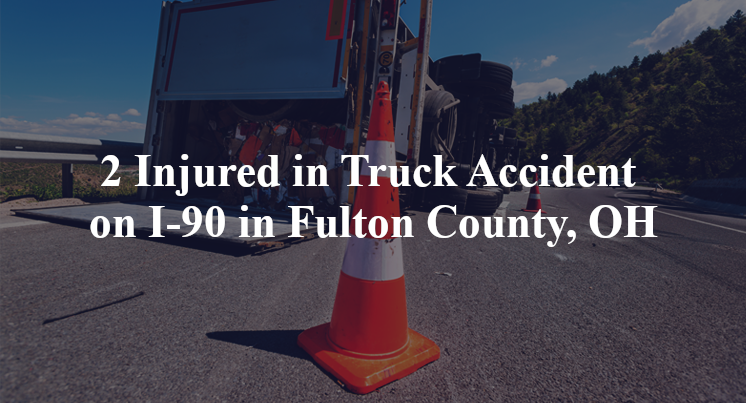
Two of the truck drivers were hospitalized with non-life-threatening injuries after the crash, according to authorities. Their names have not been made public yet.
Authorities have not released any additional information about the Fulton County crash at this time.
Commentary by Attorney Michael Grossman
When a crash like this makes the news — multiple trucks overturned, passenger vehicles crushed — most people naturally ask, “Was this just bad luck, or was someone at fault?” Reports say high winds caused several trucks to overturn on the Ohio Turnpike, one of which fell onto two other vehicles. But that explanation raises more questions than it answers.
Wind alone doesn’t topple a properly loaded, properly operated 18-wheeler. Severe weather may play a role, but that doesn’t mean no one bears responsibility. It matters whether those trucks were moving, slowing or already stopped when the gusts hit. It matters how those trucks were loaded, whether the drivers were trained to handle changing weather, and what kind of safety protocols the companies had in place for operations during storms.
For example, one of the key questions here is whether the trucks were parked on the shoulder or stopped in an active lane of travel. If they were stopped in-lane, why? Were they following orders from dispatch? Did poor visibility cause sudden braking? If they were on the shoulder, did the shoulder provide enough structural support for high-profile vehicles in strong winds? These aren’t just hypotheticals; these are questions that black box data, dash cams and driver communication logs can help answer.
Then there’s the matter of cargo. Even if the crash wasn’t caused by shifting loads, the stability of each truck under high wind conditions depends heavily on how the trailers were packed. Lightweight or top-heavy loads are more vulnerable to tipping, especially in storm conditions. That opens the door to questions not just about the drivers, but about the people who loaded the trucks and the policies that allowed them to continue operating in those conditions.
I’ve handled cases where the root problem wasn’t just weather, but a series of human decisions made before the truck ever left the yard. Decisions about when to shut down operations, how cargo is secured and how drivers are trained to react in fast-changing conditions. Without an in-depth investigation, it’s impossible to know whether this crash was preventable, but in my experience, it often is.
Key Takeaways:
- Wind may be a factor, but it doesn’t absolve everyone of responsibility. Investigators need to look deeper.
- Black box data, dash cams and dispatch records can clarify whether driver behavior or company policies played a role.
- Cargo configuration and trailer load balance may have contributed to the trucks’ instability.
- Stopping location and lane usage matter, especially on a busy highway during a storm.
- True accountability requires more than assumptions; it requires hard evidence and a full investigation.

 call us
  Email Us
  Text us