
Dayton, OH — August 24, 2024, one person was killed and another was injured in a truck accident at about 9:30 a.m. on northbound Interstate 75.
Authorities said a semi-truck drove off the road near the exit for State Route 4, going down an embankment and hitting a pole.
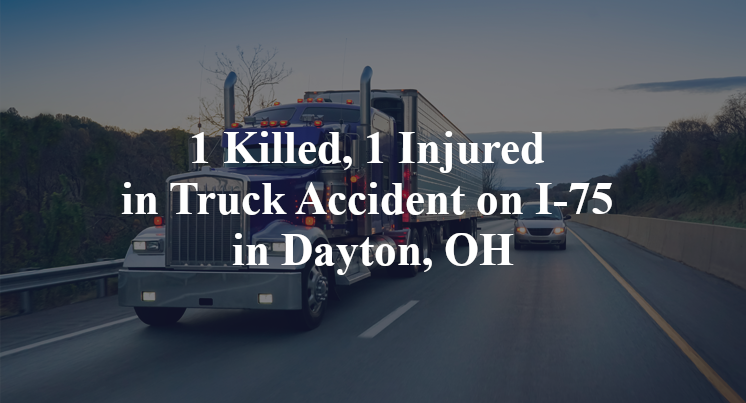
A passenger in the Federal Express truck, a 37-year-old woman, died at the scene of the crash, according to authorities. Her name has not been made public yet.
The driver, a 35-year-old man, was hospitalized with non-life-threatening injuries, authorities said.
Authorities have not released any additional information about the Montgomery County crash at this time.
Commentary by Attorney Michael Grossman
When people hear that a semi-truck ran off the highway, crashed down an embankment, and killed someone inside the cab, the natural question is: How does that even happen? Was it driver error? A mechanical failure? A medical emergency? Something else entirely? At this point, we just don’t know.
What we do know is that the truck left the roadway and collided with a pole, resulting in the death of a passenger inside the truck. The driver survived with non-life-threatening injuries. But as far as the public record goes, we don’t yet have any details about why the truck left the road in the first place. That’s not a small oversight. It’s the most important piece of the puzzle.
To get answers, we need evidence. Was the driver distracted, perhaps using a phone? That’s something investigators can verify through cell phone records. Did the truck have in-cab cameras or lane-departure systems? If so, they may show whether the driver was alert and in control of the vehicle, or if something went wrong inside the cab.
It’s also worth asking whether the truck’s black box, called the engine control module (ECM), was working and preserved after the crash. ECM data can show whether the truck was braking, accelerating or changing direction just before the wreck. That information is often the difference between guessing and knowing.
And while the driver is the one behind the wheel, it’s also fair to ask whether their employer, the trucking company, played any role. Was this driver well-trained? Did the company perform a meaningful background check before hiring him? I’ve handled cases where companies hired drivers with multiple firings on their record, then acted surprised when they got someone killed. A crash like this raises the question: Was the driver truly qualified to be operating that truck?
There’s also the matter of fatigue. Was this driver near the end of a long shift? Did dispatch push him to meet a tight delivery window? Trucking is a business, and sometimes companies push drivers harder than they should. If that played a role here, it’s something investigators will need to uncover.
The bottom line is this: until we know why the truck left the road, it’s premature to say who’s to blame. But one person is dead, and that makes it all the more urgent to get to the bottom of it.
Key Takeaways:
- It’s still unclear what caused the truck to leave the road. Driver behavior, mechanical issues or other factors may be involved.
- Cell phone records, in-cab cameras and ECM data are critical for understanding what happened in the moments before the crash.
- The trucking company’s hiring, training and scheduling practices may be relevant depending on the facts.
- A proper investigation must look beyond surface-level assumptions and dig into all possible contributing factors.
- Full accountability is only possible once all the evidence is in and analyzed.

 call us
  Email Us
  Text us