
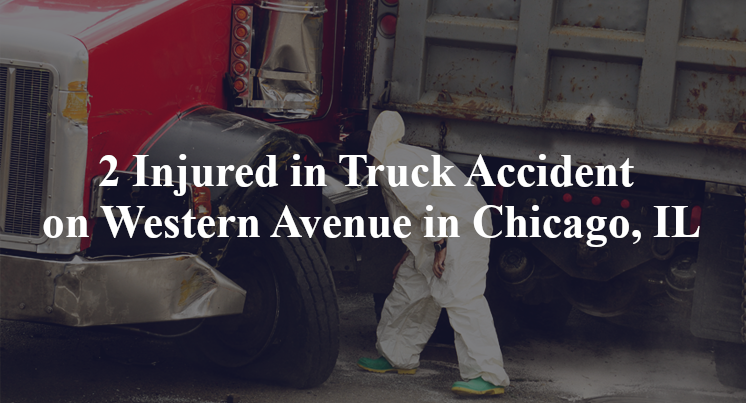
Chicago, IL — January 7, 2025, two people were injured in a truck accident at about 3:30 a.m. in the 6700 block of Western Avenue.
Authorities said a northbound SUV crashed into a semi-truck heading the other way near Marquette Road. The truck careened into a pedestrian and a Chicago Transit Authority bus shelter.
The pedestrian, a 66-year-old man whose name has not been released at this point, suffered a broken leg and multiple cuts in the crash. He was taken to a local hospital for treatment, according to authorities.
The SUV driver, a 31-year-old woman, also was hospitalized with minor injuries, authorities said. She was cited for speeding, failure to yield, disobeying a turn signal and driving with no insurance and expired plates.
Authorities did not report any other injuries.
The crash remains under investigation.
Commentary by Attorney Michael Grossman
When I hear about a crash like this one, my first thought is to examine how the actions of the drivers and the conditions at the scene contributed to such a chain of events. Urban crashes often involve complex interactions between multiple road users, and this incident highlights the risks posed by driver errors, particularly at busy intersections.
A critical issue in this case is the cited actions of the SUV driver. Speeding, failure to yield, and disobeying a turn signal suggest that the driver’s behavior significantly contributed to the crash. Investigators will need to confirm how these infractions led to the initial collision with the semi-truck and whether the driver’s actions left the truck driver with little or no opportunity to avoid the incident.
The semi-truck’s role also warrants attention. Was the truck traveling at a safe speed and within its lane when the crash occurred? Large trucks are less maneuverable and take longer to stop, making them more vulnerable to sudden hazards created by other vehicles. Investigators should look at whether the truck driver had time and space to react to the SUV’s actions.
Another important aspect is the effect of the crash on the pedestrian at the bus shelter. While the pedestrian was not directly involved in the collision, the truck’s movement after impact led to his injury. This raises questions about the design and placement of bus shelters near busy intersections. Were there adequate barriers or space to protect pedestrians from wayward vehicles? If not, this could highlight a need for infrastructure improvements in urban areas with heavy pedestrian traffic.
Lastly, the time of the crash introduces additional factors such as low visibility and reduced traffic enforcement, which can sometimes encourage risky driving behavior. Investigators should consider whether lighting or other environmental conditions at the scene may have played a role in the SUV driver’s apparent failure to follow traffic rules.
This crash illustrates the cascading effects of driver errors, particularly in high-traffic urban areas. A thorough investigation into the actions of both drivers, the design of the intersection and the placement of pedestrian infrastructure will be essential to understanding what went wrong and exploring ways to reduce the risk of similar incidents in the future.

 call us
  Email Us
  Text us