
Union Township, IN — July 24, 2025, a woman was killed due to a truck accident at approximately 3:00 a.m. along U.S. Highway 30.
According to authorities, an 18-wheeler was at a stop in the westbound lanes of U.S. 30 due to a stop light at the County Line Road intersection when the accident took place.
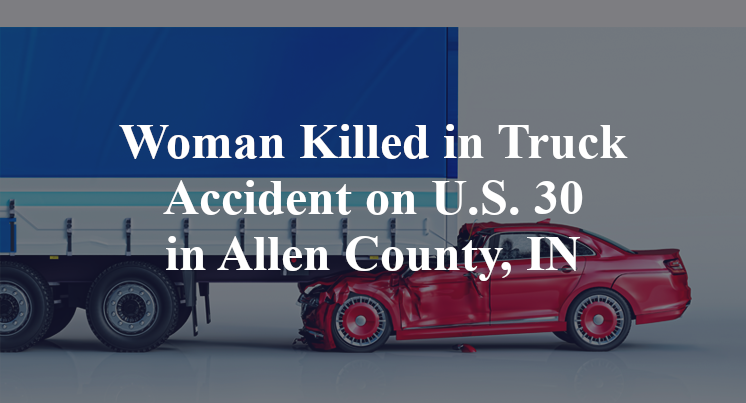
Officials indicate that, for as yet unknown reasons, a passenger car rear-ended the back of the 18-wheeler. The woman who had been behind the wheel of the passenger vehicle reportedly suffered fatal injuries due to the wreck and was declared deceased at the scene. Additional details—including the identity of the victim—are not available at this point in time. The investigation is currently ongoing.
Commentary by Attorney Michael Grossman
When a car rear-ends an 18-wheeler that was reportedly stopped at a traffic light, many people assume it’s an open-and-shut case: the driver of the car must have been distracted or speeding. But even in a rear-end crash, especially one that proves fatal, it’s essential to ask: Was the truck as visible and stationary as it should have been?
At 3:00 in the morning, visibility plays a huge role in whether a stopped vehicle can be seen in time to avoid a collision. Did the trailer have functioning tail lights and reflective markings? Was the area well lit, or was the truck sitting in near-total darkness? These aren’t theoretical concerns—they’re real-world variables that make the difference between a safe stop and a deadly hazard.
I’ve reviewed cases where trailers lacked proper lighting or reflective tape, and even though the truck was legally stopped, drivers approaching from behind had little to no chance of seeing them until it was too late. That’s why federal regulations require specific reflective markings on trailers, and why it matters whether they were clean, intact, and properly placed at the time of the crash.
Another issue is how long the truck had been stopped. Was it simply waiting at a red light, or was it stopped for some other reason—like a mechanical issue or missed turn—that left it idling in the lane longer than expected? And even if the stop was legitimate, was the trailer fully within its lane, or did part of it protrude into an active traffic lane?
To get answers, investigators will need to examine ECM data, dash cam footage (if available), and any surveillance video from nearby intersections or businesses. Physical evidence like skid marks—or the lack of them—can also shed light on whether the car’s driver tried to brake or never saw the truck at all.
Key Takeaways:
- While the passenger vehicle rear-ended the truck, the cause of the crash may involve more than just driver error.
- Visibility is a critical issue at 3:00 a.m.—investigators should confirm whether the truck had functioning lights and reflective markings.
- The reason the truck was stopped and how it was positioned in the lane both warrant close examination.
- ECM data, dash cams, and scene evidence are essential to understanding how and why the crash occurred.
- Even in rear-end collisions, responsibility can be shared if proper safety standards weren’t met.

 call us
  Email Us
  Text us