
Brown County, OH — September 10, 2025, Tiffany Keidel was killed and a child was injured in a truck accident at about 8:10 a.m. on State Route 32/James A Rhodes Appalachian Highway.
Authorities said a westbound semi-truck collided with a Kia Sportage that was crossing the highway on Freeh Road.
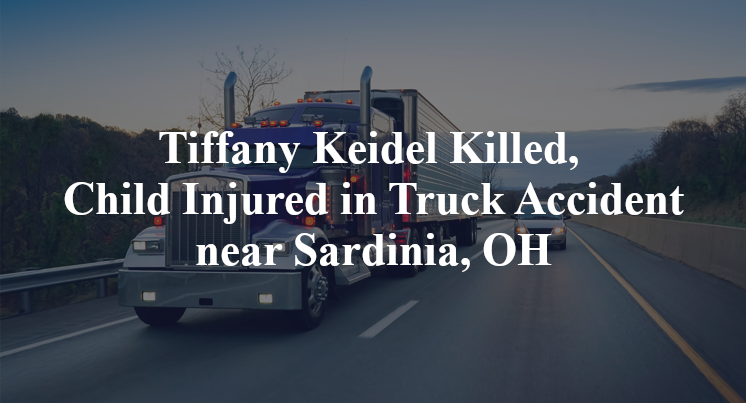
Kia driver Tiffany Keidel, 30, was pronounced dead at the scene of the crash east of Sardinia, according to authorities, while a child riding with her was seriously injured.
The truck driver was hospitalized with minor injuries after the crash, authorities said.
Authorities have not released any additional information about the Brown County crash at this time. The accident is still under investigation.
Commentary by Attorney Michael Grossman
When people hear that a semi-truck collided with a smaller vehicle crossing a highway, they naturally want to know: How exactly did the crash unfold? Did the car fail to yield? Was the truck speeding or distracted? Were sightlines at the intersection obstructed? Unfortunately, none of those questions have been answered yet, at least not in the public reporting.
What we do know is that a woman lost her life and a child was seriously hurt. That makes it all the more important to go beyond surface-level assumptions and dig into the facts.
Let’s start with the most basic uncertainty: Was the Kia already in the intersection when the truck approached, or did it enter the highway into the path of an oncoming truck? Either version paints a very different picture of potential fault. If the Kia was already crossing when the truck struck it, investigators would need to ask whether the trucker was speeding, distracted or delayed in responding. On the other hand, if the Kia entered too late, that could point to driver error, though even that wouldn’t end the inquiry.
Intersections along highways like State Route 32 present unique risks, and properly evaluating this one will likely require more than just on-scene photos. Real answers usually come from deeper sources, like dash cam footage, black box data, and cell phone records. Those tools can show when brakes were applied, how fast the truck was moving and whether the driver was distracted in the moments leading up to impact.
But truck crash investigations should never stop with the driver. There are also questions about the company’s role. Did they properly vet the driver’s qualifications? Were there known safety issues on this route? In some cases I’ve handled, we uncovered that a driver had been fired multiple times for unsafe behavior, yet a new company hired them without even a proper road test. That kind of oversight turns a preventable crash into a predictable one.
In short, this crash could turn out to be about visibility, reaction time, distraction, hiring practices or some combination of all of them. But none of that will be known unless someone actually looks. And that’s not something the public can count on law enforcement to do on their own. Police investigate for criminal wrongdoing, not civil liability. Holding the right people accountable takes independent scrutiny, a detailed timeline, and a commitment to let the evidence, not assumptions, lead the way.
Key Takeaways:
- It’s unclear whether the Kia was already in the intersection or entered into the truck’s path, each scenario raises different legal questions.
- Critical evidence like dash cam footage, black box data and phone records will likely be needed to understand the truck driver’s actions.
- Trucking company policies, hiring decisions and driver training may also play a role in how and why this crash happened.
- Police investigations may not cover all avenues of liability; independent investigation is often necessary to get the full story.
- Accountability hinges on facts, not assumptions, which requires thorough evidence gathering and analysis.

 call us
  Email Us
  Text us