
Update (June 23, 2025): Authorities have identified the driver killed in this accident as Sioux Falls resident Tracey Scott Nuss, 59.
Sioux Falls, SD — June 17, 2025, one person was killed in a truck accident at about 11:35 p.m. on northbound Interstate 29.
Authorities said a 2024 Freightliner Cascadia semi-truck with two trailers hit a concrete barrier in a construction zone near mile marker 79, causing its second trailer to tip over onto a 2008 Lexus IS250.
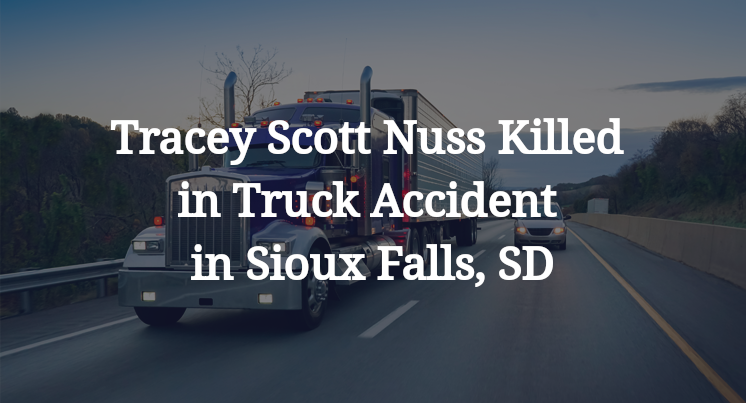
The Lexus driver, a 59-year-old Sioux Falls man, was pronounced dead at the scene of the crash, according to authorities. His name has not been made public yet.
The truck driver was not injured, authorities said.
Authorities have not released any additional information about the Minnehaha County crash at this time.
Commentary by Attorney Michael Grossman
When people hear that a semi-truck’s trailer tipped over and killed a driver in a construction zone, the first question that comes to mind is usually: How does something like that even happen? That’s exactly the right question, and one that’s not answered in the initial reports.
Right now, all we know is that the truck hit a concrete barrier in a work zone, and that somehow caused its second trailer to tip onto a nearby vehicle. But that raises several unanswered questions. For example, was the truck moving too fast for the conditions? Did the driver drift or swerve unexpectedly? Was the trailer properly loaded and secured? Each of these possibilities leads to a different line of investigation, and potentially a different party who may bear responsibility.
A crash like this could involve failures on multiple fronts. If the trailer tipped because it was overloaded or unevenly packed, then the company that loaded the truck may have a role in what happened. If the driver was distracted, fatigued or unfamiliar with the construction zone, then his actions, and the company’s training and oversight, need to be scrutinized. And if road design or signage in the construction zone contributed, that opens up yet another avenue for accountability.
These kinds of cases are complex because they often involve more than just a driver’s mistake. I’ve handled cases where it turned out that a trucking company’s shortcut in hiring or training led to disaster. One firm I dealt with hired a driver who had been let go from several prior jobs, and then gave her what amounted to a glorified driving test before putting her behind the wheel of an 80,000-pound vehicle. When you dig deep, you often find that the crash didn’t start at the point of impact it started with a long chain of bad decisions made days, weeks, or even months earlier.
To find the truth, investigators need access to more than just the scene. That includes the truck’s engine control module (which can show speed, braking and steering data), dash cam or in-cab footage if available, driver logs and even cell phone records. All of that data is critical to answering the core question: Was this crash avoidable?
Key Takeaways:
- It’s not clear yet why the truck hit the barrier or what caused the trailer to tip over.
- Investigators will need to examine whether the trailer was properly loaded and secured.
- The truck’s black box, driver records and in-cab cameras could all help clarify what went wrong.
- Multiple parties, not just the truck driver, could be held responsible depending on what the evidence shows.
- Thorough investigation is key to making sure the right people are held accountable.

 call us
  Email Us
  Text us