
UPDATE (October 16, 2025): Recent reports have been released which identify the person who lost her life as a result of this accident as a 17-year-old girl from Henderson. No additional details are currently available. The investigation remains ongoing.
Fletcher, NC — October 13, 2025, a teenage girl was killed due to a dump truck accident shortly before 11:00 a.m. along Mills Gap Road..
According to authorities, one person was traveling in a Pontiac Torrent on Mills Gap Road in the vicinity southeast of the Cane Creek Road intersection when the accident took place.
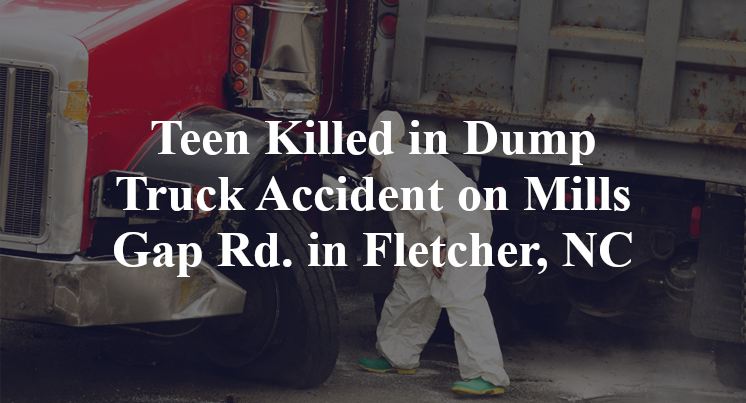
Details surrounding the accident remain scarce. Officials indicate that, for as yet unknown reasons, a head-on collision occurred between the Pontiac and a dump truck. The person from the Pontiac reportedly suffered fatal injuries over the course of the accident. Additional information pertaining to this incident—including the identity of the victim—is not available at this point in time. The investigation is currently ongoing.
Commentary by Attorney Michael Grossman
When a dump truck collides head-on with a passenger vehicle, especially on a two-lane road like Mills Gap, the central question is straightforward: Why were both vehicles in the same lane at the same time? That may sound obvious, but it’s the kind of question that can only be answered with physical evidence and a detailed crash reconstruction—not assumptions.
At this point, we don’t know which vehicle crossed the center line, whether the road was straight or curved at the point of impact, or whether visibility played a role. But those are exactly the questions a proper investigation should focus on. The truck’s engine control module (ECM) can reveal steering input, braking, and speed in the final seconds before the crash. If dash cam footage or in-cab video exists, that could confirm whether the driver drifted, swerved, or tried to avoid something in the road.
Another layer to this is whether the dump truck was fully loaded and how that may have affected control. Fully loaded trucks are harder to slow down and maneuver, especially on narrow or hilly roads. If the vehicle was hauling a heavy load, investigators should also be looking at whether it was properly balanced and whether the driver was trained to handle that kind of cargo on that kind of road.
Driver fatigue and distraction should also be on the table. If the truck drifted over the line because the driver was on a phone call or failed to maintain lane position, that changes the entire fault picture. That’s why phone records and driver logs are just as important as physical evidence from the scene.
I’ve seen cases where a commercial driver veered into oncoming traffic for just a second—and the result was fatal. In some of those cases, it wasn’t just the driver who made a bad decision, but also the company that put him on the road without proper screening, training, or supervision. That possibility shouldn’t be ruled out here either.
Key Takeaways:
- It’s still unclear which vehicle crossed the center line, and evidence is needed to establish fault.
- ECM data, dash cam footage, and phone records can clarify the truck driver’s actions leading up to the crash.
- Road layout, line of sight, and vehicle load should be considered in the investigation.
- Company policies and driver training may come into play depending on what the evidence shows.
- A full reconstruction is necessary to determine not just how the crash happened, but who’s legally responsible.

 call us
  Email Us
  Text us