
Rockingham, VT — March 8, 2025, Taylor Binnington and his 4-month-old son were killed and wife Evelyn Lake and their 3-year-old son were injured in a truck accident at about 9:45 a.m. on Interstate 91.
Authorities said a Hyundai IONIQ 5 crashed into a tanker truck that had stopped on northbound I-91 because of earlier minor accidents on the snowy highway.
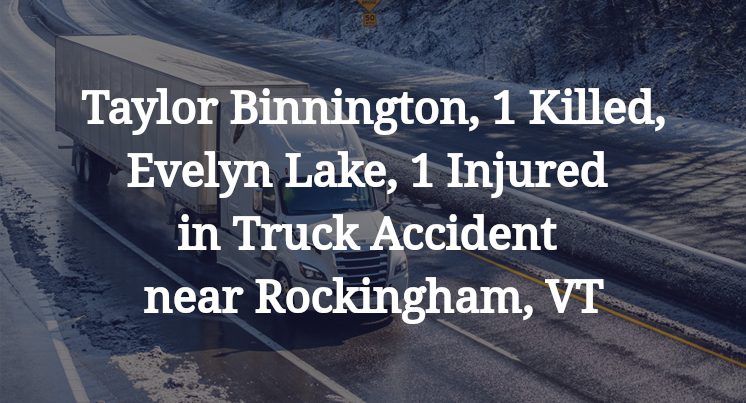
Driver Taylor Binnington, 39, was pronounced dead at the scene of the crash, while wife Evelyn Lake, 36, and two sons were hospitalized, according to authorities. The younger boy died after being airlifted to a local hospital.
No other injuries were reported.
Authorities have not released any additional information about the Windham County crash at this time. The accident is still under investigation.
Commentary by Attorney Michael Grossman
Crashes involving stopped semi-trucks on highways often raise serious concerns about visibility, road conditions and whether the truck driver followed proper safety protocols. In this case, reports indicate that a Hyundai IONIQ 5 collided with a tanker truck that had stopped due to earlier minor accidents on a snowy Interstate 91. That immediately raises a critical question: Did the stopped truck create an unavoidable hazard, or was this crash preventable?
One of the first things investigators need to determine is whether the tanker truck was visible to approaching drivers. Snowy conditions can reduce visibility and make it harder for drivers to recognize stopped vehicles in time. Trucking regulations require that when a commercial truck stops on the highway, drivers must activate hazard lights and place reflective triangles or flares behind the vehicle. If those precautions weren’t taken, that could have made it significantly harder for the Hyundai’s driver to recognize the tanker in time to avoid the crash.
Another important issue is whether the tanker truck had any option to stop somewhere safer. Sometimes, truck drivers are forced to stop due to traffic conditions, but when possible, they should attempt to move onto the shoulder or another safe area. Was the truck stopped in a live travel lane, or had it been pulled as far out of traffic as possible? That detail could be crucial in understanding whether this crash could have been avoided.
At the same time, road conditions likely played a role. Snowy highways reduce traction and increase stopping distances. Did the Hyundai’s driver have enough time and space to react, or were icy conditions a major factor? Investigators should examine road maintenance records and weather reports to determine whether the highway had been treated properly for winter conditions.
At this stage, there isn’t enough public information to say exactly what went wrong. But if authorities focus only on who hit whom without asking why the truck was stopped where it was and whether it was properly marked, they risk missing key details. A thorough investigation should look at visibility, road conditions and driver actions to ensure a full understanding of what led to this devastating crash.

 call us
  Email Us
  Text us