
Frenstat, TX — October 13, 2025, Steven Dlabaj was injured due to a motorcycle versus car accident just after 12:00 midnight along Farm to Market 60.
According to authorities, 63-year-old Steven Dlabaj was traveling on a northwest bound Harley-Davidson motorcycle on F.M. 60 in the vicinity of the Meadowbrook Lane intersection when the accident took place.
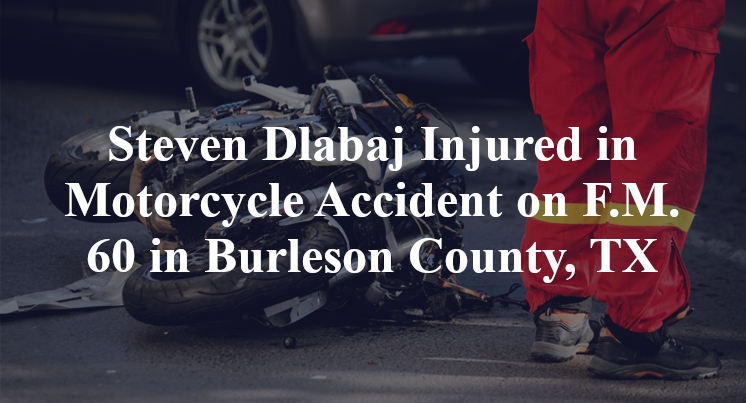
Officials indicate that, for reasons yet to be confirmed, a collision took place between the front-end of the motorcycle and the back-left of a northwest bound Chevrolet Silverado pickup truck. Dlabaj reportedly sustained serious injuries due to the wreck. No other injuries have been reported. Additional details pertaining to this incident are not available at this point in time. The investigation is currently ongoing.
Commentary by Attorney Michael Grossman
Crashes involving motorcycles and pickup trucks on rural roads at night can be difficult to unpack—especially when the details are limited and visibility may have played a role. But regardless of the hour or setting, when someone ends up seriously hurt, the investigation has to go deeper than just identifying points of contact.
Did the authorities thoroughly investigate the crash?
When two vehicles are traveling in the same direction and a motorcycle strikes the rear side of a pickup, it’s easy to assume the motorcyclist was following too closely or failed to react in time. But assumptions like that don’t explain why the impact happened at that moment. Was the truck braking, turning, or making an unexpected maneuver? Was the motorcycle in the truck’s blind spot? A complete investigation should reconstruct vehicle positions, examine timing, and verify what actions each driver took. If those steps weren’t taken, key factors may have been missed.
Has anyone looked into the possibility that a vehicle defect caused the crash?
In situations like this, where the motorcycle hits the rear of another vehicle, it’s important to ask whether a mechanical failure played a role. Brake failure on the bike, a lighting issue on the truck, or even a sudden electronic malfunction could all shift how we understand what went wrong. Without a full inspection of both vehicles, it’s impossible to know whether something besides human error contributed to the outcome.
Has all the electronic data relating to the crash been collected?
Motorcycles may not always store advanced data, but newer models sometimes log speed and braking inputs. Meanwhile, the Chevrolet Silverado likely has detailed electronic records—speed, brake application, turn signals, and possibly even lane position. Cell phone data and any available surveillance or dash cam footage could further clarify what each driver was doing in the final seconds. If that information hasn’t been pulled, then the picture of what happened remains incomplete.
When someone suffers serious injuries on an open stretch of road, it’s not enough to guess at what went wrong. Getting it right takes a full, evidence-driven review of every possible factor.
Takeaways:
- Nighttime same-direction crashes require careful reconstruction to avoid assumptions.
- Mechanical failures—on either vehicle—should be ruled out through inspection.
- Vehicle and phone data can help explain positioning, behavior, and timing.

 call us
  Email Us
  Text us