
National City, CA — August 28, 2025, one person was injured due to a single-vehicle truck accident at approximately 2:45 p.m. along Interstate 805.
According to authorities, an 18-wheeler with a trailer in tow was traveling along I-805 in the vicinity of U.S. 54 when the accident took place.
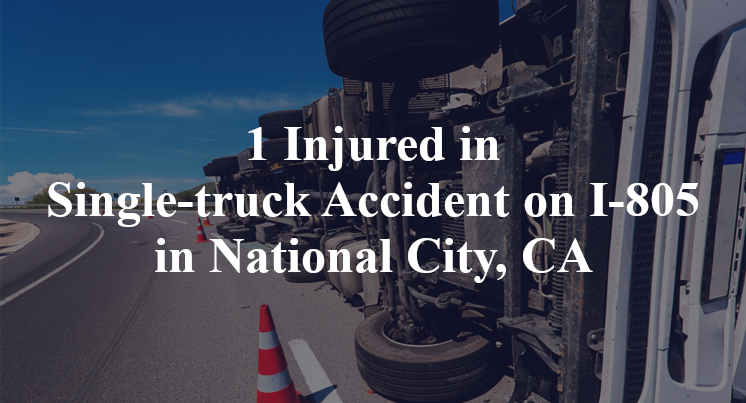
Officials indicate that, the truck may have hydroplaned, veering off of the roadway, as a result, and crashing down the side of an embankment before coming to a stop. The person who had been behind the wheel of the truck reportedly sustained serious injuries over the course of the accident; they were transported to an area medical facility by EMS in order to receive immediate treatment. Additional details pertaining to this incident—including the identity of the victim—are not available at this point in time. The investigation is currently ongoing.
Commentary by Attorney Michael Grossman
When a tractor-trailer leaves the highway and crashes down an embankment, the most important question isn’t just what the driver suffered—it’s why the truck lost control in the first place. Reports mention the possibility of hydroplaning, but that’s really just another way of saying the truck didn’t maintain traction. What investigators need to determine is whether that was due to unavoidable conditions or preventable factors.
Hydroplaning doesn’t occur in a vacuum. Tire tread depth, tire pressure, speed, and lane positioning all affect whether a truck skids across standing water or maintains control. That means one of the first steps in an investigation should be a full inspection of the truck’s tires and braking system. Were they roadworthy? Were they maintained according to federal safety standards?
Another area of inquiry is the driver’s conduct. Was the truck moving too fast for the weather? Did the driver react abruptly to traffic or another hazard in the roadway? The truck’s ECM can reveal speed, braking, and throttle use just before the crash, which will help clarify whether the driver was exercising caution under the conditions.
Finally, the trucking company’s role can’t be overlooked. Companies are responsible for ensuring their trucks are properly maintained and that drivers are trained to adjust speed during inclement weather. If a company pushes drivers to stay on schedule regardless of conditions, that can set the stage for crashes that might otherwise have been avoided.
At this stage, the root cause isn’t clear—but that’s precisely what the investigation needs to uncover. Whether this was a case of unavoidable weather or a preventable failure will depend entirely on what the evidence shows.
Key Takeaways:
- The central question is why the truck lost control—weather alone doesn’t explain it.
- Tire condition, braking systems, and maintenance records must be examined.
- ECM data can confirm the truck’s speed and driver inputs before the crash.
- A company’s training and scheduling practices may influence how drivers handle adverse conditions.
- Determining accountability requires more than citing “hydroplaning”—it requires proving whether the loss of control was avoidable.

 call us
  Email Us
  Text us