
Dallas County, TX — October 14, 2024, a man and woman were injured in a single-car accident at approximately 10:30 p.m. along I.H. 635.
According to authorities, a 21-year-old man and a 23-year-old woman were traveling in a westbound Chevrolet Malibu on Lyndon B Johnson Freeway in the vicinity west of Noel Road when the accident took place.
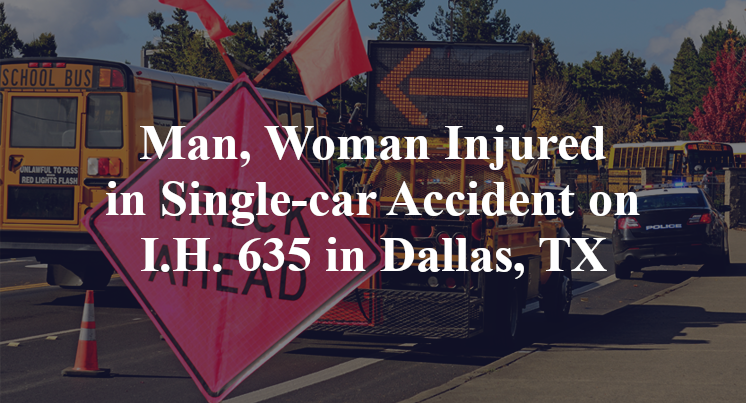
Officials indicate that, for as yet unknown reasons, the front-left tire of the Malibu catastrophically failed; the Malibu was consequently involved in a single-vehicle collision in which its front-left quarter crashed into a retaining wall.
The woman reportedly suffered serious injuries due to the wreck, while the man sustained more minor injuries; they were each transported to local medical facilities by EMS in order to receive necessary treatment. Additional information pertaining to this incident—including the identities of the victims—is not available at this point in time. The investigation is currently ongoing.
Commentary by Attorney Michael Grossman
When a serious injury results from a single-vehicle crash caused by an apparent tire failure, it’s tempting to see it as a mechanical fluke—an unfortunate but random event. But in my experience, tire-related crashes are rarely random. Whether the issue stems from design, installation, maintenance, or manufacturing, it’s critical to investigate fully. In a case like this one along I.H. 635, there are three questions that should be asked to get to the bottom of what happened.
First, did the authorities conduct a thorough investigation? When a crash involves a tire blowout or failure, investigators should document the condition of the tire, the road surface, and the vehicle’s trajectory after the failure occurred. Did the tire show signs of tread separation, sidewall damage, or underinflation? Was the retaining wall properly designed and placed to reduce crash severity? These factors all contribute to a complete understanding of how and why the incident occurred. If that level of detail isn’t captured at the scene, a follow-up investigation by an independent expert is often necessary.
Second, has anyone looked into whether the tire itself was defective? Tire failures can result from manufacturing flaws, poor design, or improper installation. If the tire was defective, it may not have shown outward signs of damage before the crash. Identifying such issues requires retaining the failed tire and subjecting it to a detailed forensic analysis—something that often doesn’t happen unless someone steps in to preserve the evidence early. If the tire is discarded or the vehicle is quickly repaired, critical information could be lost forever.
Lastly, has all electronic data from the vehicle been collected? Modern vehicles, including the Chevrolet Malibu, typically include event data recorders that store key information like speed, brake use, throttle input, and steering behavior just before a crash. This data can help determine how the driver responded to the failure and whether the vehicle’s safety systems operated as expected. It may also offer insight into whether the failure was sudden or gradual. Like other forms of evidence, this data is time-sensitive and needs to be secured promptly.
In any crash involving a mechanical component failure—especially one that leads to serious injuries—it’s not enough to label it as a freak occurrence. Asking these questions is the least that can be done to ensure that those affected by this crash get the clarity and closure they deserve.

 call us
  Email Us
  Text us