
Berkeley County, WV — April 23, 2025, Shannon O’Brien was killed in a truck accident at about 8 p.m. on northbound Interstate 81.
Authorities said a 2004 Nissan Armada crashed into the back end of a semi-truck was stopped in traffic because of road construction near mile marker 9 in Inwood.
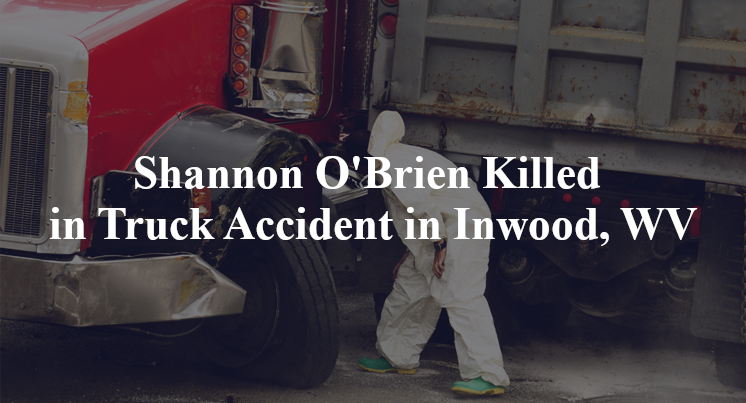
Nissan driver Shannon O’Brien, a 55-year-old Mississippi resident, was pronounced dead at the scene of the crash, according to authorities.
The truck driver was not injured in the crash, authorities said.
Authorities have not released any additional information about the Berkeley County crash at this time. The accident is still under investigation.
Commentary by Attorney Michael Grossman
When a passenger vehicle crashes into the rear of a stopped semi-truck in a construction zone, the legal analysis needs to focus on more than just who struck whom. Construction zones are among the most hazardous parts of any highway, and the law expects both commercial and non-commercial drivers to exercise heightened caution. But the responsibility for safety is especially heavy on the shoulders of the commercial driver, whose vehicle can cause far greater harm in the event of a collision.
In this case, the truck was reportedly stopped in traffic due to road construction. That makes visibility and warning the central issues. Was the truck stopped in a clearly marked lane? Were its brake lights and hazard flashers working? Was there adequate signage or lighting leading up to the traffic stoppage to alert approaching drivers? These are not minor details. They’re foundational to understanding whether the truck could be seen and responded to in time.
Commercial drivers are trained to anticipate how changing traffic and construction zones affect visibility and reaction time. That includes leaving space between themselves and vehicles ahead, avoiding sudden stops when possible and ensuring their vehicle is properly lit and marked. If the truck was stopped without hazard lights or in an area where a passenger vehicle driver wouldn’t reasonably expect to encounter a complete stop, that changes the way the law views the collision.
That said, drivers in passenger vehicles also have a duty to operate their vehicles at a speed that allows them to respond to unexpected slowdowns, especially in work zones, where warning signs and speed reductions are usually posted well in advance. Investigators will need to determine whether the Nissan driver had enough notice to slow down and whether distraction, fatigue or speed played a role in the failure to do so.
This crash also highlights the added risks that come with road construction. Shifting lanes, temporary signage, low light and uneven traffic flow all create conditions that demand more awareness and more restraint. For commercial drivers, the expectation is not just to drive safely; it’s to account for the fact that others may not.
When a person loses their life in a collision like this, the investigation must go beyond assumptions about fault. It has to answer whether both drivers, especially the one in the commercial vehicle, did everything reasonably possible to avoid the crash. Because a work zone shouldn’t become a death trap, and a stopped truck in traffic shouldn’t be invisible to oncoming drivers. If it was, then the question becomes: why? And could someone have done something differently to prevent it?

 call us
  Email Us
  Text us