
Dallas County, TX — March 22, 2025, Shaniqua Stanley was killed following a truck accident shortly before 11:30 p.m. along Interstate Highway 635.
According to authorities, 36-year-old Shaniqua Shuntae Stanley was traveling in a northbound Dodge Journey on I.H. 635 in the vicinity of the U.S. Highway 80 junction when the accident took place.
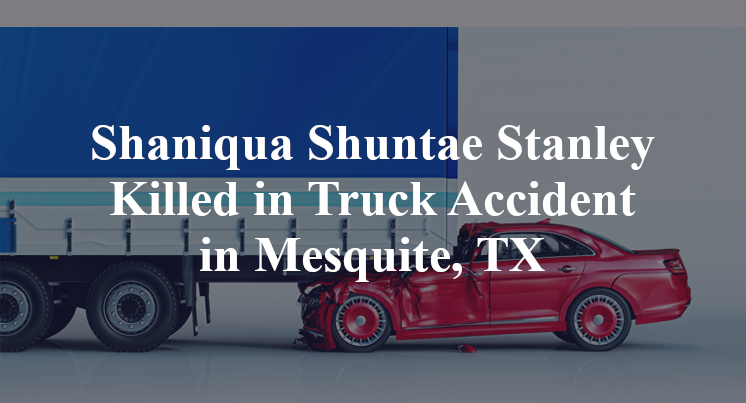
There was reportedly construction in the area at the time of the accident. Officials indicate that, for reasons yet to be confirmed, the Dodge failed to appropriately control its speed. A collision consequently occurred between the front-end of the Dart and the rear-end of a trailer being hauled by a Freightliner 18-wheeler.
Stanley reportedly suffered fatal injuries due to the wreck. It does not appear that anyone else was harmed. Additional details pertaining to this incident are not available at this point in time. The investigation is currently ongoing.
Commentary by Attorney Michael Grossman
When a fatal crash occurs in a construction zone involving a passenger vehicle and a commercial truck, it’s tempting to treat it as a straightforward case of a driver not reacting quickly enough. But in my experience, crashes like this are rarely that simple. To understand what happened along I-635 and whether the incident could have been prevented, there are three critical questions that should be asked.
First, did the authorities conduct a thorough investigation? Construction zones present a host of challenges—shifting lanes, reduced visibility, unclear signage, and sudden changes in traffic flow. A meaningful investigation should include a careful review of the work zone layout, any temporary traffic control devices, and whether warning signs or lights were in place and functioning. Was traffic backed up unexpectedly? Was the commercial vehicle moving or stopped? These details are crucial and often overlooked unless the crash is subjected to a detailed reconstruction, especially when one party is no longer alive to provide their account.
Second, has anyone considered whether a vehicle defect contributed to the crash? If the Dodge Journey failed to slow down, it’s important to determine whether that was due to driver inattention—or a failure in the braking or throttle systems. Mechanical issues like worn brakes, electronic malfunctions, or delayed response times can prevent a vehicle from reacting properly in an emergency situation. These issues can’t be identified without a forensic inspection, which requires that the vehicle be preserved after the crash.
Lastly, has all of the electronic data from the vehicles involved been collected? Both the Dodge Journey and the Freightliner are likely equipped with event data recorders that capture key pre-crash information—speed, brake use, throttle input, and steering behavior. This data can help clarify how quickly the driver reacted and whether the vehicle responded appropriately. Dashcam footage, GPS data, and phone records could also help fill in the timeline. But like all digital evidence, this information is time-sensitive and must be secured early in the investigation.
When someone loses their life in a crash—especially in the complex environment of a construction zone—it’s not enough to assume the explanation begins and ends with a rear-end impact. Asking these questions is the least that can be done to ensure that those affected by this crash get the clarity and closure they deserve.

 call us
  Email Us
  Text us