
Berks County, PA — February 18, 2025, a driver was killed following a commercial truck wreck at around 3:28 p.m. along Route 222.
Authorities say they were called to the scene in the Kutztown area. The accident involved two commercial trucks and a sedan.
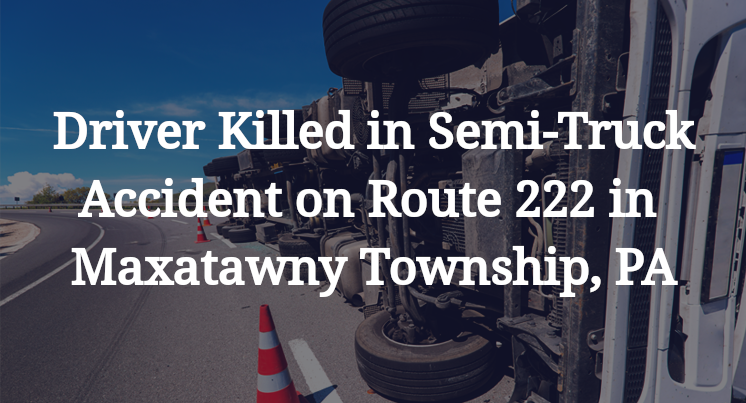
Right now, exact details about the accident are unclear. The three vehicles somehow crossed paths and collided. As a result, authorities say the driver of the sedan was killed. That person was not identified. It’s unclear if anyone else was hurt.
No further information about the crash is available at this time.
Commentary by Attorney Michael Grossman
Anytime you hear that a sedan collided with not one, but two semi-trucks, it’s hard not to wonder—how does something like that even happen? Passenger cars and 18-wheelers don’t just “cross paths” on a busy highway unless something’s gone seriously wrong. And when it ends with someone losing their life, as it did here, the need to figure out why becomes all the more urgent.
Deadly Truck Wrecks Come with Serious Questions
From what’s been reported so far, this crash involved two commercial trucks and a sedan in the Kutztown area. Beyond that, we’re left with more questions than answers. Was the sedan stuck between the trucks? Did one of the trucks make a sudden move? Were all vehicles moving at the time, or was one stopped or slowing down? These are the kinds of details that matter, and none of them are clear yet.
One thing we do know: when commercial vehicles are involved in a crash, the investigation has to go deeper. That’s because big rigs don’t just bring more weight—they bring more complexity. You’re not just looking at one driver’s actions. You’re looking at equipment, training, company policies, and decisions made long before anyone got behind the wheel.
What Evidence Needs to Be Secured
To really understand what happened here, investigators will need to pull every thread:
- Black box data from each truck showing speed, braking, and throttle use before impact.
- Dash cams or in-cab video, if available, to show what each driver saw and how they reacted.
- Physical evidence at the scene, like skid marks and impact points, to map out the crash.
- Statements from witnesses or other drivers nearby, especially in a multi-vehicle scenario like this.
I’ve worked on cases where a single lane change by a trucker—done without clearing the blind spot—caused a deadly chain reaction. And I’ve seen crashes where both drivers did their best, but were boxed in by poor visibility, tight delivery schedules, or worn-out equipment. The truth is, you can’t just look at the surface and think you have the full story.
Why Responsibility Doesn’t Always Fall on One Person
With commercial vehicles, it’s rarely about one split-second mistake. Often, it’s a mix of things—driver behavior, visibility, timing, vehicle condition, and company oversight. Did the drivers have proper training? Were they under pressure to meet unrealistic delivery windows? Was one of the trucks improperly maintained or overloaded?
These are the questions that don’t show up in a press release—but they’re exactly the questions that determine who’s really responsible.
Key Takeaways
- A fatal crash involving two trucks and a sedan raises serious questions about how the vehicles were moving and interacting.
- Critical evidence—black box data, camera footage, and scene analysis—is needed to piece together what happened.
- Crashes involving big rigs are rarely simple; they often point to deeper issues beyond the moment of impact.
- Company training, equipment condition, and scheduling pressure may all play a role in what led to this wreck.
- Getting the truth means more than blaming a driver—it means understanding the full chain of decisions and actions.

 call us
  Email Us
  Text us