
Ruscombmanor Township, PA — July 12, 2025, Pable Espejo was killed in a dump truck accident at about 1:05 p.m. on State Route 73/Blandon Road.
Authorities said an eastbound car collided with a westbound Mack dump truck near Fraser Road. The impact left the car facing north in the middle of the road, while the truck was able to stay in its lane.
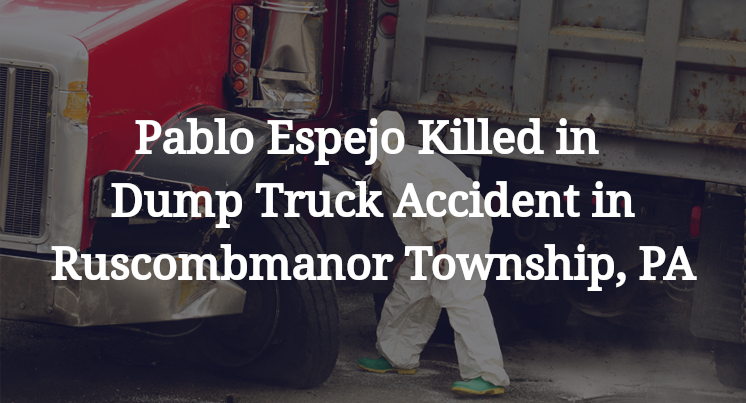
Reading resident Pablo G. Espejo, 41, who was driving the car, was pronounced dead at the scene of the crash, according to authorities.
The truck driver was hospitalized with suspected minor injuries after the crash, authorities said.
Authorities have not released any additional information about the Berks County crash. The accident is still under investigation.
Commentary by Attorney Michael Grossman
When people hear about a fatal crash involving a car and a dump truck, one of the first things they want to know is: How exactly did these two vehicles end up in each other’s path? According to the limited details released so far, an eastbound car and a westbound dump truck collided head-on or nearly so, but the report doesn’t clearly explain why that happened, or which vehicle crossed into the other’s lane. That’s not a minor omission. It’s the key to understanding whether this was simply a tragic encounter or something that could and should have been prevented.
Right now, we’re told that the car ended up facing north in the middle of the road, while the dump truck stayed in its lane. That could suggest the car veered into oncoming traffic, but it’s just as possible that the car swerved in response to something the dump truck did, like a sudden turn or lane drift. Without clearer facts, any assumption about fault is premature.
To get to the truth, an investigation will need to look far beyond the debris field. Dump trucks, like other heavy commercial vehicles, are often equipped with engine control modules, the truck’s “black box,” which can provide hard data on speed, braking and steering inputs in the moments before the crash. Many are also fitted with in-cab cameras that show where the driver’s attention was or whether a medical episode or distraction occurred.
Another critical angle is what the driver was doing in the seconds leading up to the crash. Was he on the phone? Was he fatigued? That information is available, but only if someone pulls cell phone records, interviews the driver and digs into his work schedule.
Then there’s the broader context: Who put this driver behind the wheel? What kind of training did he have? I’ve handled cases where trucking companies hired drivers with deeply concerning histories and then barely checked their skills. In one of those cases, the company gave a driver with multiple past firings a 20-minute road test and called it a day. That decision, as much as the driver’s own actions, played a central role in the crash that followed.
Ultimately, finding out what happened in Ruscombmanor Township is going to require someone to gather all the available evidence, analyze it without bias and ask the tough questions. That’s the only way to hold the right people accountable, whether that turns out to be the car’s driver, the truck driver or even a company that cut corners.
Key Takeaways:
- It’s not yet clear which vehicle crossed into the other’s path; that fact is essential to understanding what happened.
- Black box data, in-cab cameras and phone records can help reveal what both drivers were doing at the time of the crash.
- The truck driver’s training, driving history and employer’s hiring practices may also be relevant and should be investigated.
- Premature assumptions about fault overlook the complexity of commercial vehicle crashes.
- Getting to the truth requires a full, evidence-based investigation, not speculation.

 call us
  Email Us
  Text us