
Frio County, TX — March 5, 2025, a man was injured due to an overturned truck accident at approximately 10:00 p.m. along U.S. Highway 57.
According to authorities, a 56-year-old man was traveling in a westbound Freightliner Cascadia truck with a trailer in tow on U.S. 57 in the vicinity west of the F.M. 140 intersection when the accident took place.
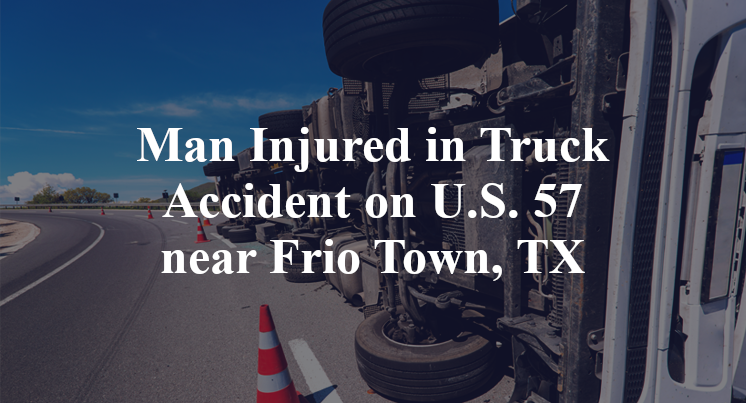
Officials indicate that, for as yet unknown reasons, the truck was involved in a single-vehicle collision in which it apparently overturned and struck a fence. The man reportedly sustained serious injuries over the course of the accident. Additional details pertaining to this incident—including the identity of the victim—are not available at this point in time. The investigation is currently ongoing.
Commentary by Attorney Michael Grossman
When a semi-truck overturns on an open stretch of highway, especially in a single-vehicle crash, the immediate question is: what caused the driver to lose control? At 10:00 p.m., with no other vehicles reportedly involved, we’re looking at a situation where driver behavior, mechanical integrity, and load stability all come under the microscope.
Rollovers Are Often the Result of Preventable Errors
A fully loaded tractor-trailer is more vulnerable to rollover than most people realize. Factors like high speed through curves, overcorrection, drifting off the pavement, or even a momentary lapse in focus can be enough to tip a rig on its side. But trucks don’t just fall over on their own—something happened in the seconds before this crash that shifted the vehicle beyond the limits of balance and control.
Key questions that need answers include:
- Was the driver fatigued or distracted at the time of the crash?
- Was the trailer loaded properly, or did a cargo shift throw off the vehicle’s center of gravity?
- Did the truck hit a soft shoulder, uneven pavement, or other roadway hazard while maneuvering?
None of these are hypothetical. I’ve handled cases where a rollover was blamed on road conditions, only for black box (ECM) data to show the driver was traveling well above a safe speed for the area. In others, load records revealed that cargo hadn’t been balanced or secured properly, making a rollover inevitable the moment a sudden correction was needed.
Company Oversight and Route Familiarity
If this driver was operating under a commercial motor carrier, then the company’s role must also be examined. Was the driver dispatched with adequate rest? Was the route known for poor lighting or shoulder drop-offs? Were there any previous incidents involving the same stretch of road or vehicle?
These aren’t background details—they’re pieces of the puzzle that determine whether this was an unavoidable event or a preventable outcome tied to policy decisions made before the engine ever turned on.
Key Takeaways:
- Single-vehicle rollovers in commercial trucks often point to driver fatigue, distraction, or overcorrection—issues that can be proven with ECM and inspection data.
- Improperly loaded or unbalanced cargo can destabilize a truck, especially if a sudden steering adjustment is made.
- Roadway conditions may contribute, but speed, driver reaction, and company policies are typically the core factors in loss-of-control crashes.
- The trucking company’s dispatch procedures, training, and route planning may come under scrutiny if systemic issues played a role.
- A complete investigation should evaluate both the physical causes of the crash and the decisions that led to them.

 call us
  Email Us
  Text us