
Duson, LA — May 11, 2025, One person was killed following an 18-wheeler accident that occurred at around 4:00 A.M. on I-10.
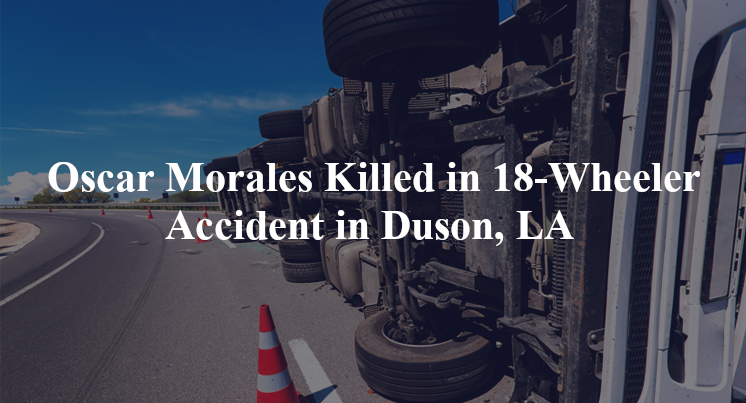
Authorities are investigating after an 18-wheeler accident left one person dead during the early-morning hours of May 11th. According to official reports, Oscar Morales was operating an 18-wheeler in the eastbound lanes of Interstate 10, when for unknown reasons the truck left the roadway and hit a cable barrier before overturning.
When first responders arrived on the scene, they found that Morales had sustained fatal injuries and he was pronounced deceased. At this time there has been no further information released about the accident, including what caused the truck to lose control, however this remains an ongoing investigation and more details may be released by authorities in the future.
Commentary by Attorney Michael Grossman
When a commercial truck suddenly veers off a highway and overturns, people often assume it was just a truck accident or an error in judgment. But in my experience handling these cases for over 30 years, incidents like this don’t happen without a cause—and figuring out what that cause was is where the real work begins.
The biggest legal question raised by a crash like this is: Why did the truck leave the roadway? That question matters because the answer determines who, if anyone, should be held accountable under the law.
There are many possibilities. The driver could have suffered a medical emergency or fallen asleep at the wheel. There could have been a mechanical failure that caused the driver to lose control. Maybe the cargo shifted in transit, pulling the truck off its intended path. These aren’t abstract hypotheticals. I’ve seen each of those scenarios play out in real cases.
For example, I once worked on a case involving an improperly loaded steel slab that made the vehicle unstable. The driver didn’t make it far before losing control. At first, everyone pointed fingers at him. But when we dug deeper, we found the real blame lay with the shipper and the trucking company, who prioritized speed over safety and sent the driver out with a dangerously loaded trailer.
To really understand what happened in this recent crash, investigators need more than eyewitness statements or photos of the wreck. They need to pull the truck’s ECM data to see what the vehicle was doing in the moments before it left the road. They need to look at the driver’s logs, cell phone records, and any in-cab video that might shed light on his condition or distractions. Without that, it’s impossible to know whether this was a momentary mistake or the result of deeper issues, like company policies that overwork drivers or a history of skipped maintenance checks.
The harsh reality is that many official investigations don’t go that far. They stop at the crash scene and issue a conclusion based on surface-level evidence. That may be enough to write a report, but it’s not enough to ensure accountability—or to prevent the next crash from happening the same way.
The takeaway here is simple: when a commercial truck overturns and someone loses their life, we owe it to everyone affected to ask every question, review every piece of evidence, and follow the facts wherever they lead. That’s how the legal system is supposed to work—and it’s the only way to make sure the right people are held responsible.

 call us
  Email Us
  Text us