
Herkimer, NY — February 17, 2025, one person was injured in a multi-vehicle truck accident shortly before 11:30 a.m. along the New York State Thruway.
According to authorities, an 18-wheeler was traveling in the westbound lanes of the thruway in the vicinity between Little Falls and Herkimer when the accident took place.
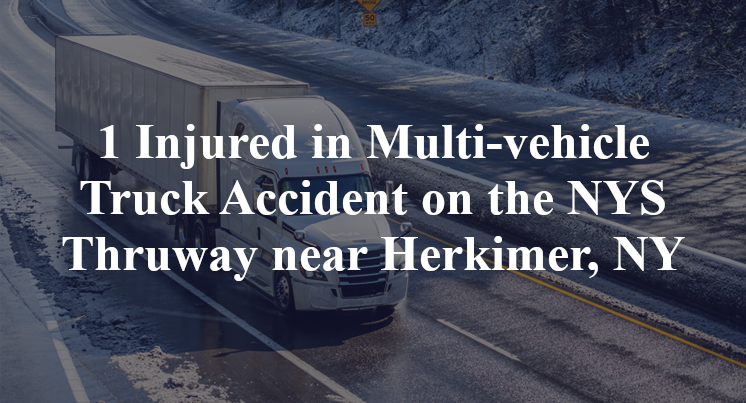
The weather and road conditions in the area were reportedly snowy. Officials indicate that, for reasons yet to be confirmed, the westbound 18-wheeler struck another 18-wheeler that had apparently become disabled along the thruway. Several other cars were reportedly involved in the collision following the initial impact. Authorities state that a total of 15 cars and three 18-wheelers were part of the overall incident.
One person who was involved in the wreck suffered injuries of unknown severity; they were transported to a local medical facility by EMS in order to receive necessary treatment and are reportedly in stable condition. Additional details pertaining to this pileup—including the identity of the injured victim—are not available at this point in time. The investigation is currently ongoing.
Commentary by Attorney Michael Grossman
When an 18-wheeler strikes a disabled truck on a snowy highway, triggering a multi-vehicle pileup, the key question isn’t just what happened, but why it happened. In my experience handling truck accident cases, large-scale wrecks like this rarely occur without multiple contributing factors that need to be examined.
Why did the moving 18-wheeler collide with the disabled truck? Truck drivers are trained to recognize and respond to stopped vehicles on the highway, even in poor weather. Did the driver fail to see the disabled truck in time due to distraction, fatigue, or poor visibility? Was the truck traveling too fast for the snowy conditions? Investigators should examine dashcam footage, electronic logging device (ELD) data, and witness statements to determine whether driver error was a factor.
Was the disabled truck properly marked? When a commercial truck becomes disabled on the highway, the driver is required to activate hazard lights and place reflective warning triangles to alert approaching traffic. Investigators should determine whether the disabled truck driver followed these safety procedures and whether the truck’s placement on the roadway contributed to the crash.
Did weather and road conditions contribute to the pileup? Snowy roads reduce traction and increase stopping distances. If drivers—particularly those in large trucks—failed to adjust their speed accordingly, that could have made avoiding the wreck much more difficult. Investigators should assess whether excessive speed for conditions was a factor.
Did broader issues contribute to the crash? Trucking companies are responsible for ensuring their drivers are properly trained for winter driving and that their vehicles are in safe operating condition. If the moving truck’s brakes, tires, or visibility equipment were not properly maintained, or if the driver was under pressure to stay on schedule despite hazardous road conditions, those factors could be relevant to understanding why this crash happened. Investigators should review company policies, safety records, and past violations to determine whether broader issues played a role.
At the end of the day, the most important thing is finding answers. Even if it takes an independent investigation to gather the right evidence, it’s critical to examine every factor to ensure those affected by the crash get the clarity and closure they deserve.

 call us
  Email Us
  Text us