
Atlanta, GA — July 2, 2025, several people were injured due to a multi-vehicle truck accident at approximately 4:45 a.m. along Interstate Highway 285.
According to authorities, the accident took place in the westbound lanes of I.H. 285 in the vicinity of Bouldercrest Road.
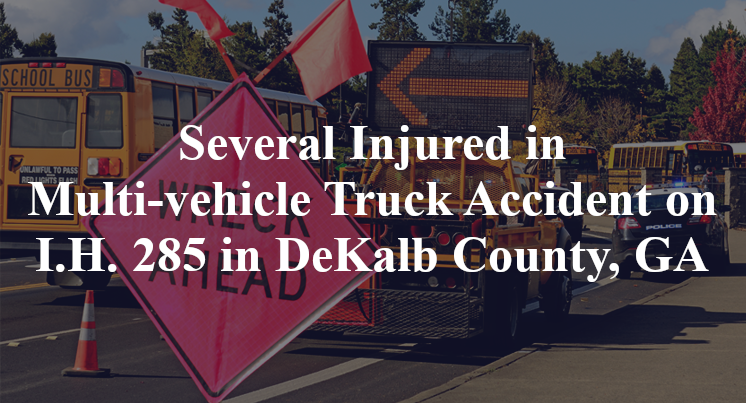
Preliminary reports state that an 18-wheeler struck a wall and began spilling fuel onto the roadway. Chain reaction crashes took place, afterward, involving four other vehicles. There have been reports of injuries, though the number and severity of those injuries have not yet been specified. Additional details pertaining to this incident are not available at this point in time. The investigation is currently ongoing.
Commentary by Attorney Michael Grossman
When a crash begins with an 18-wheeler hitting a wall and ends with a chain reaction involving multiple other vehicles, the first thing investigators should be asking is what caused that truck to lose control in the first place? At 4:45 in the morning, on a major urban loop like I-285, there are multiple risk factors in play—from fatigue to distraction to mechanical failure—and any of them could explain how a single-vehicle event escalated into a multi-car pileup.
Truck crashes that involve fixed objects like walls usually start with lane departure. Whether the truck drifted, swerved, or overcorrected, the root cause may lie in driver behavior. Was the driver alert and in full control? If not, why not? At that hour, fatigue is a common contributor. Investigators should be looking closely at the trucker’s hours-of-service records, dispatch logs, and sleep schedule. Phone records and in-cab video can help determine whether distraction or drowsiness played a role.
Another possibility is equipment failure. A blown steer tire, brake lockup, or steering system malfunction could all cause a truck to veer into a wall, especially on a curve or during a lane change. A post-crash inspection of the truck will be critical to rule out—or confirm—any mechanical cause.
But the impact didn’t end with the truck hitting a barrier. The subsequent fuel spill created a hazardous environment that likely left following drivers with little time to react. Whether other vehicles slid on the slick surface, ran into stopped traffic, or collided while trying to avoid the truck, it’s clear that the initial incident triggered a dangerous chain of events. That’s why the sequence of the crashes matters as much as the severity. Investigators should reconstruct the timeline carefully to understand how quickly the hazard developed and whether anything could have been done to mitigate it.
I’ve worked cases where fuel spills turned a single-vehicle crash into a far more serious situation—especially when traffic was dense, lighting was poor, or the spill wasn’t clearly visible until drivers were right on top of it. If the truck was carrying a known hazardous material, the question also becomes whether the driver was trained and equipped to respond properly, and whether containment measures were in place.
Key Takeaways
- The initial loss of control by the 18-wheeler is the critical event that set off the chain reaction, and its cause—fatigue, distraction, or mechanical failure—must be determined.
- Black box data, in-cab video, and hours-of-service records will be essential to evaluate driver condition and vehicle behavior.
- A fuel spill following the impact significantly increased the risk for other motorists and likely contributed to subsequent collisions.
- Post-crash inspections should verify whether the truck was mechanically sound and whether hazardous materials protocols were followed.
- Assigning responsibility will require a clear reconstruction of both the initial crash and how conditions rapidly deteriorated for the vehicles that followed.

 call us
  Email Us
  Text us