
Concordia, MO — February 7, 2025 two people were killed following a multi-truck accident at approximately 2:00 p.m. along Interstate Highway 70.
According to authorities, a Belton, South Carolina, man was traveling in a westbound 2020 Volvo 18-wheeler on Interstate Highway 70 in the vicinity of State Highway T when the accident took place.
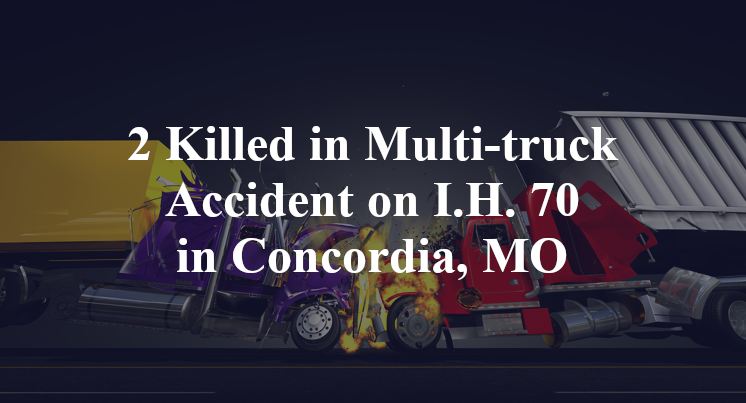
The cause of the accident remains unclear. Officials indicate that, for as yet unknown reasons, the 2020 Volvo failed to safely maintain its lane of travel. It reportedly veered left, entering the center median and crashing through the barrier cables. It then continued on, according to reports, entering the opposing lanes of traffic. This apparently resulted in a head-on collision with an eastbound 2023 Volvo 18-wheeler occupied by a 58-year-old Westminster, Colorado, man. The 2023 Volvo overturned over the course of the accident, according to reports. Also involved in the wreck was a third 18-wheeler, but preliminary reports are vague with the details as to how.
Both of the men who had been behind the wheels of the Volvo 18-wheelers suffered fatal injuries, reports state, and were declared deceased at the scene. Additional details pertaining to this incident—including the identities of the victims—are not available at this point in time. The investigation is currently ongoing.
Commentary by Attorney Michael Grossman
When an 18-wheeler crosses a median and enters oncoming traffic, causing a head-on collision, the key question isn’t just what happened, but why it happened. In my experience handling truck accident cases, crashes like this rarely occur without multiple contributing factors that need to be examined.
What caused the first truck to leave its lane? Large commercial vehicles don’t just drift into a median without reason. Did the driver experience a medical emergency, such as a sudden loss of consciousness? Did a mechanical failure—like a blown tire or steering issue—make it impossible to maintain control? Investigators should examine medical records, vehicle diagnostics, and witness statements to determine whether an external factor contributed to the crash.
Was fatigue or distraction involved? Long-haul truck drivers spend hours behind the wheel, and exhaustion or in-cab distractions can slow reaction times. Given that the crash happened in the early afternoon—a time when some drivers may already be nearing the end of a long shift—investigators should review hours-of-service logs, phone records, and in-cab monitoring data to determine whether fatigue or distraction played a role.
Did broader issues contribute to the wreck? Trucking companies are responsible for ensuring their drivers are properly trained and following safe driving practices. If the company pressured the driver to push past legal hours-of-service limits, failed to maintain its vehicles, or ignored other safety concerns, that could be relevant in understanding why this crash happened. Investigators should examine company policies, driver training records, and past safety violations to determine whether broader issues played a role.
At the end of the day, the most important thing is finding answers. Even if it takes an independent investigation to gather the right evidence, it’s critical to examine every factor to ensure those affected by the crash get the clarity and closure they deserve.

 call us
  Email Us
  Text us