
Mosier, OR — May 19, 2025, a motorcyclist was injured in a truck accident at approximately 9:30 a.m. along Interstate Highway 84.
According to authorities, the accident took place in the eastbound lanes of I.H. 84 in the vicinity east of U.S. Highway 30.
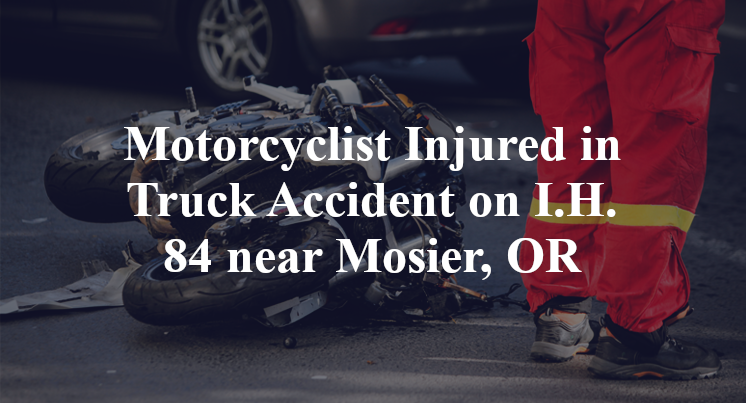
Officials indicate that, for as yet unknown reasons, a collision took place between a motorcycle and an 18-wheeler. The motorcyclist reportedly suffered injuries of unknown severity; they were flown to an area medical facility in order to receive necessary treatment. Additional details pertaining to this incident—including the identity of the victim—are not available at this point in time. The investigation is currently ongoing.
Commentary by Attorney Michael Grossman
After 30 years handling commercial truck crash cases, I’ve seen how collisions between motorcycles and 18-wheelers often involve more than just one bad moment on the highway. When a crash like this sends a motorcyclist to the hospital by airlift, the key question isn’t just how the collision occurred, but whether the truck driver had the visibility, training, and awareness to avoid it.
Motorcycles present unique challenges in terms of visibility and response time. They can be harder to spot, but that’s exactly why commercial drivers are trained to be more cautious, not less. If a truck driver fails to notice a rider in a blind spot or makes a lane change without checking twice, the result can be catastrophic. In many of the cases I’ve handled, what looked like a “simple accident” was actually a failure to maintain proper lane discipline, judge speed, or recognize the presence of a smaller vehicle in close proximity.
This crash happened on Interstate 84—one of those stretches where speeds are high and traffic tends to flow fast. At highway speed, there’s very little margin for error. A moment of inattention, a misjudged maneuver, or even a poorly timed merge by a commercial truck can leave a rider with no room to react. That’s why these crashes deserve careful scrutiny—not just of what happened in the seconds before the collision, but of the habits and decision-making that led up to it.
And if the 18-wheeler was part of a commercial operation, then the role of the trucking company can’t be ignored. Did they train the driver adequately? Were they monitoring driver hours to prevent fatigue? Did they maintain the vehicle’s mirrors, sensors, and blind-spot warning systems? I’ve seen time and again that when companies treat safety as a box to check instead of a daily commitment, the consequences fall hardest on the people with the least protection—like motorcyclists.
Getting to the bottom of a crash like this means asking the right questions and refusing to stop at surface-level explanations. Serious wrecks deserve serious investigation, not assumptions. Understanding how the motorcyclist came into conflict with a much larger vehicle, and whether the driver and their company did everything they should have to prevent it, is key to figuring out what might have happened. Getting clear answers to these questions is the least that can be done to help those affected find the clarity and closure they deserve.

 call us
  Email Us
  Text us