
New Castle County, DE — May 26, 2025, a motorcyclist was injured in a truck accident at approximately 3:30 p.m. along State Highway 1.
According to authorities, a 59-year-old was traveling on a northbound motorcycle on S.H. 1 on the William V Roth Jr. bridge when the accident took place.
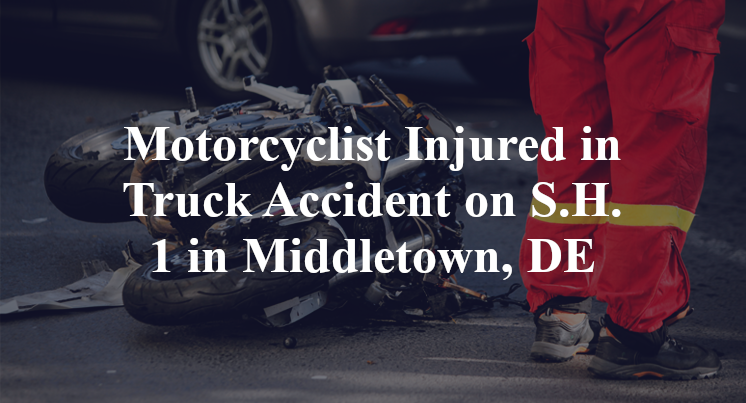
Officials indicate that the motorcycle had been laid down in an attempt to avoid a collision with another vehicle. Following that, the man was reportedly hit by an 18-wheeler. The motorcyclist sustained critical injuries and was transported to a local medical facility by EMS in order to receive necessary treatment. Additional details pertaining to this incident—including the identity of the victim—are not available at this point in time. The investigation is currently ongoing.
Commentary by Attorney Michael Grossman
When a motorcyclist lays their bike down to avoid a crash and ends up being struck by an 18-wheeler, it tells you something went seriously wrong on that bridge. Crashes like this don’t just happen in a vacuum—they happen when drivers make sudden decisions, visibility breaks down, or traffic conditions leave no safe options. The question is: who created the conditions that left this motorcyclist with nowhere to go?
What We Know—and What We Don’t
Authorities say the rider was trying to avoid a collision with another vehicle when he laid the motorcycle down. That’s an important detail, and also a major unanswered question. What vehicle was he trying to avoid? Did it suddenly change lanes, brake unexpectedly, or cut him off? And what happened in the moments after that maneuver that led to the rider being hit by an 18-wheeler?
At this point, we don’t know whether the truck driver had any opportunity to avoid the motorcyclist, or whether the truck was already too close to stop. But there’s a major difference between an unavoidable impact and one that results from poor following distance, inattention, or distraction.
How This Should Be Investigated
In my experience, cases like this demand a close look at every piece of physical and digital evidence available:
- ECM data from the 18-wheeler can show speed, braking activity, and steering input just before the crash.
- Dash cam footage, if available, could shed light on what the truck driver saw—and when they saw it.
- Surveillance cameras on bridges or nearby traffic cams might reveal what the vehicle ahead of the motorcyclist was doing.
- Witness statements and tire mark analysis can help reconstruct the sequence of events.
Laying a bike down is usually a last-resort move. It often means the rider didn’t believe they had any safe path forward. That could be because of another driver’s unpredictable actions or because the truck behind him was following too closely to allow a safe escape. Either way, those facts matter—and they’ll shape who is ultimately held responsible.
Why Accountability Matters
Motorcyclists have far less margin for error in highway traffic, and a mistake by another driver—whether it’s a car or a commercial truck—can be life-altering in a split second. That’s why it’s not enough to say, “There was a crash.” The goal of any proper investigation should be to understand the chain of events that led to it—and determine whether it was preventable.
That’s how accountability works: by looking past the outcome and digging into the decisions that caused it.
Key Takeaways
- The motorcyclist’s evasive maneuver suggests another vehicle may have triggered the chain of events, but that vehicle has not yet been identified.
- A proper investigation must include ECM data, dash cam footage, and a timeline reconstruction to understand how the 18-wheeler became involved.
- The difference between an unavoidable crash and a preventable one often comes down to driver behavior—speed, attention, and space management.
- Motorcycle crashes involving trucks require careful scrutiny, as even a moment of inattention by a commercial driver can have catastrophic consequences.
- Full accountability depends on gathering all the facts, not just focusing on who got hurt.

 call us
  Email Us
  Text us