
Ector County, TX — July 23, 2025, a motorcyclist was injured due to a car accident just after 1:00 a.m. along State Loop 338.
According to authorities, a 45-year-old man was traveling on a southeast bound Harley-Davidson motorcycle on S.L. 338 in the vicinity south of I-20 when the accident took place.
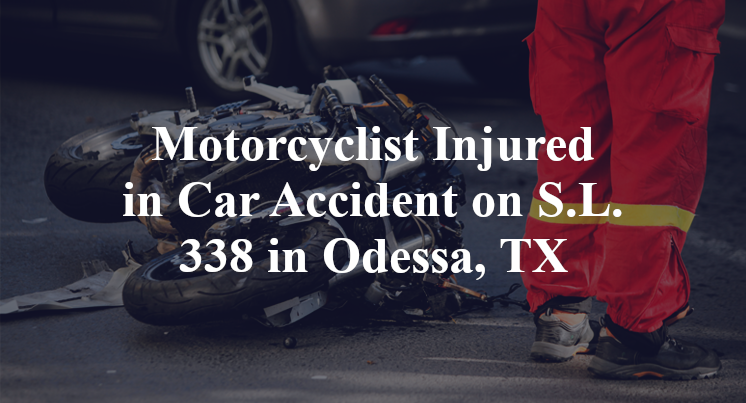
Officials indicate that, for as yet unknown reasons, a rear-end collision took place between the front of the motorcycle and the back of a Ford F-250 pickup truck. The motorcyclist reportedly sustained serious injuries over the course of the accident. Additional details pertaining to this incident—including the identity of the victim—are not available at this point in time. The investigation is currently ongoing.
Commentary by Attorney Michael Grossman
When a motorcycle collides with the rear of a pickup, the easy assumption is that the rider just didn’t stop in time. But crashes like this often involve more than a simple lapse in reaction, and the only way to find out is through careful, detailed investigation.
Did the authorities thoroughly investigate the crash?
It matters whether the Ford F-250 slowed gradually, braked suddenly, or changed lanes just before impact. Did investigators chart the motorcycle’s path and examine whether the rider tried to brake or steer away? Without reconstructing the sequence of events, the report risks oversimplifying what actually happened. Rear-end collisions involving motorcycles are particularly complex, since a small misjudgment—or unexpected movement by the lead vehicle—can have severe consequences.
Has anyone looked into the possibility that a vehicle defect caused the crash?
Mechanical issues on either vehicle could have played a role. For the Harley-Davidson, a sudden brake problem, tire failure, or throttle malfunction could have kept the rider from avoiding impact. On the F-250’s side, defective brake lights or sudden mechanical issues could have contributed. These possibilities don’t always leave obvious clues, which is why inspections of both vehicles are critical before conclusions are drawn.
Has all the electronic data relating to the crash been collected?
The Ford F-250 likely has an event data recorder that can confirm when brakes were applied and how fast it was traveling. That evidence can be crucial in determining whether the pickup slowed in a way the rider could reasonably react to. The motorcycle may store limited data, but phone records, GPS logs, or nearby cameras could also provide context. If those resources weren’t reviewed, then the investigation may be missing the most telling evidence.
Crashes like this remind us that the “obvious” explanation isn’t always the right one. Only by asking harder questions about both vehicles and the available data do we get closer to understanding what really happened.
Key Takeaways:
- Rear-end motorcycle crashes require reconstruction of both vehicles’ movements.
- Mechanical failures in brakes, lights, or tires on either vehicle must be considered.
- Data from the pickup, the motorcycle, and surrounding electronics can clarify the true cause.

 call us
  Email Us
  Text us