
Ector County, TX — October 11, 2024, a man was injured in a motorcycle versus car accident shortly before 8:15 p.m. along East 42nd Street.
According to authorities, a 22-year-old man was traveling on a southbound Yamaha motorcycle on a private drive attempting to turn left to head eastbound 42nd Street in the vicinity east of the Englewood Lane intersection when the accident took place.
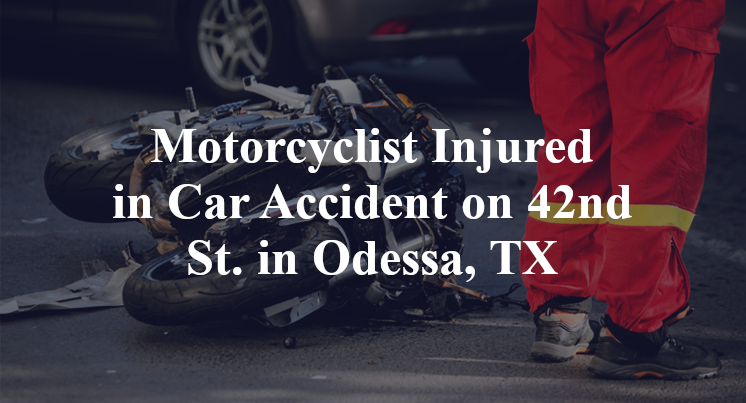
At the same time, a Honda CR-V was traveling north on a private drive and attempting to turn left to head westbound on 42nd Street. Officials indicate that, for as yet unknown reasons, a collision took place between the two vehicles.
The motorcyclist reportedly sustained serious injuries due to the crash. He was transported to a local medical facility by EMS in order to receive necessary treatment. Additional details pertaining to this incident—including the identity of the victim—are not available at this point in time. The investigation is currently ongoing.
Commentary by Attorney Michael Grossman
When someone is seriously hurt in a crash like the one reported along East 42nd Street, it is important to ask certain critical questions to get a full and accurate picture of what happened. After over three decades helping injury victims across Texas, I know firsthand that the surface details of a crash often only tell part of the story—and getting real answers requires asking the right questions.
First, we have to ask whether authorities conducted a full and proper investigation into the crash. Motorcycle collisions, especially those occurring at intersections or driveways, demand careful analysis of the scene. It’s crucial to know whether police measured skid marks, documented vehicle damage thoroughly, checked visibility and lighting conditions, and interviewed any available witnesses who might have seen how the vehicles approached and entered the roadway.
Second, it’s important to examine whether any sort of vehicle defect could have played a role. Motorcycles and SUVs alike rely on precise control systems—like brakes, steering, and tires—to avoid collisions. If a brake failure, tire blowout, or even a lighting malfunction occurred on either the motorcycle or the Honda CR-V, it could dramatically change how responsibility is viewed. Without a detailed mechanical inspection of both vehicles, these possibilities might be overlooked.
Finally, we must consider whether the electronic data from both vehicles has been preserved. Many modern motorcycles and cars record critical information such as speed, throttle position, and braking behavior just before a collision. Having access to that data could provide objective evidence about each vehicle’s movements and reactions, and could either confirm or challenge assumptions based on witness statements alone.
Answering these three questions is critical to making sure that no stone is left unturned in understanding the causes of a crash like this. Serious wrecks deserve serious investigation, not assumptions. Getting clear answers to these questions is crucial for those seeking to understand what happened and why—and it’s the least that can be done to help those affected find the clarity and closure they deserve.

 call us
  Email Us
  Text us