
Tarrant County, TX — August 7, 2025, a motorcyclist was injured due to a car accident shortly before 9:30 p.m. along Interstate highway 20.
According to authorities, a 42-year-old man was traveling on an eastbound Harley-Davidson motorcycle on I-20 in the vicinity of the exit for Green Oaks Boulevard when the accident took place.
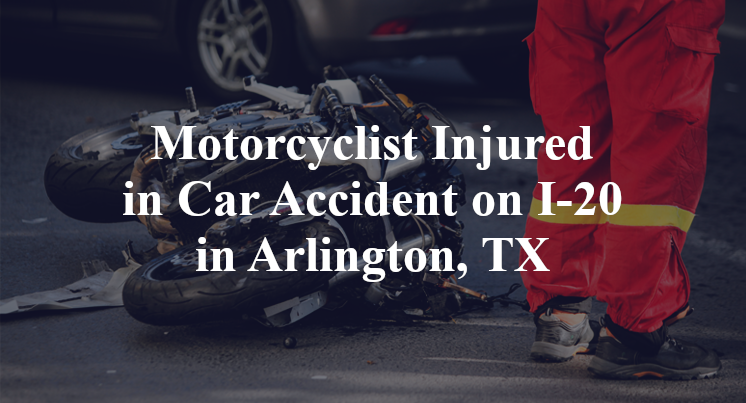
Officials indicate that, for reasons yet to be confirmed a sideswipe collision occurred between the motorcycle and the right side of a Jeep Grand Cherokee. The motorcyclist reportedly sustained serious injuries over the course of the accident. It does not appear that anyone else was harmed. Additional details pertaining to this incident—including the identity of the victim—are not available at this point in time. The investigation is currently ongoing.
Commentary by Attorney Michael Grossman
When a motorcyclist is sideswiped on a busy interstate, the outcome is almost always severe. What matters most after a crash like this isn’t just documenting the injuries but making sure the investigation uncovers the full story of how the vehicles came together.
Did the authorities thoroughly investigate the crash?
Sideswipe collisions can be difficult to analyze because the evidence often looks minimal at the scene. Investigators should be mapping the damage on both vehicles, checking for transfer marks, and reviewing the positions of each vehicle at the time of impact. The question of lane position—who crossed where—needs more than assumptions to answer. Without detailed reconstruction and follow-up with potential witnesses, there’s a risk the event gets written off without clarity.
Has anyone looked into the possibility that a vehicle defect caused the crash?
It’s natural to assume one of the drivers simply drifted, but mechanical failures can play a role too. For the motorcycle, a tire issue, brake seizure, or steering instability could cause it to veer. For the Jeep, problems with lane-keeping systems, steering, or even suspension could push it unexpectedly into the rider’s space. Unless both vehicles are properly inspected, the role of defects will likely never be considered.
Has all the electronic data relating to the crash been collected?
Both the Harley-Davidson and the Jeep may carry electronic data that can help. The Jeep likely stores speed, steering input, and braking information in the moments before impact. The motorcycle may have limited telemetry, but GPS records, phone data, or even helmet or dash cameras could provide key context. Additionally, interstate crashes are often caught on traffic cameras—an invaluable tool in sorting out what really happened. If investigators don’t move quickly to secure that evidence, it may already be lost.
For a rider, a sideswipe isn’t a minor bump—it’s a life-altering event. That’s why the investigation has to be more than routine paperwork; it has to dig into every possible cause.
Takeaways:
- Sideswipe collisions require careful reconstruction to determine lane position and movement.
- Mechanical failures in either vehicle could explain a sudden drift or loss of control.
- Electronic data, cameras, and phone records may be the key to uncovering what really happened.

 call us
  Email Us
  Text us