
Columbus, OH — May 31, 2025, a motorcyclist was injured in a box truck accident at approximately 1:50 p.m. along Scarborough Boulevard.
According to authorities, a man was traveling on a westbound Harley-Davidson motorcycle on Scarborough Boulevard in the vicinity of Brice Road when the accident took place.
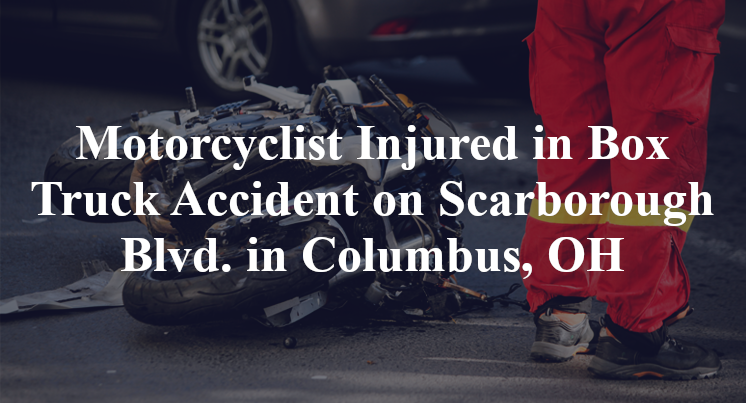
Officials indicate that a collision took place between the motorcycle and a rental box truck that was apparently attempting a U-turn. The man who had been on the motorcycle reportedly suffered critical injuries as a result of the wreck; he was transported to a local medical facility by EMS in order to receive immediate treatment. Additional details pertaining to this incident—including the identity of the victim—are not available at this point in time. The investigation is currently ongoing.
Commentary by Attorney Michael Grossman
When people hear about a motorcyclist suffering critical injuries in a collision with a box truck, one question usually comes to mind: How could a situation like that even happen? And when the early reports say the truck was trying to make a U-turn, the next question becomes Was that maneuver even safe or legal at that location?
Based on what’s been reported, the collision happened on Scarborough Boulevard near Brice Road in Columbus. The motorcyclist was heading westbound when he encountered a rental box truck attempting a U-turn. That maneuver raises some red flags right away—particularly when it involves a large, slow-turning vehicle like a box truck in an active traffic lane.
What’s not yet clear is whether the truck was already in the turn when the motorcycle approached or whether the truck driver began the maneuver suddenly. Timing matters. If the motorcyclist had no time to react, the responsibility may fall heavily on the truck driver. On the other hand, if the motorcyclist was speeding or weaving—something we don’t have evidence of yet—that could change the equation. But right now, none of that information is available to the public.
That’s exactly why an investigation needs to go beyond a surface-level traffic report. Many of these rental trucks have telematics systems that log speed, location, and other vehicle data. Surveillance video from nearby businesses could show how the turn was executed. The truck’s blind spots, turn radius, and visibility also matter when evaluating whether the driver could or should have seen the motorcycle.
One of the more overlooked aspects in cases like this is the role of training—or lack thereof. Rental truck drivers aren’t always professionals. It’s common for these vehicles to be operated by people with little to no experience handling something that size. Unlike commercial truck drivers, rental operators often don’t go through any vetting or training at all. So a key question becomes: Was this person adequately prepared to make a U-turn in a truck of that size in that specific traffic environment?
I’ve handled cases before where a crash seemed like a momentary error in judgment—until we looked closer and found that the driver was handed the keys with no real instruction on how to maneuver the vehicle safely. That lack of preparation isn’t always obvious at first glance, but it can make all the difference in how a case unfolds.
Right now, this motorcyclist is fighting for his life. He deserves answers—and the only way to get them is through a careful review of all available evidence, including data, video, and the background of the person operating the truck.
Key Takeaways:
- Reports suggest a box truck was making a U-turn when it collided with a westbound motorcycle, but many facts remain unknown.
- Critical questions include whether the U-turn was safe, legal, and visible to oncoming traffic.
- Investigators should seek telematics data, surveillance footage, and eyewitness accounts to reconstruct the crash.
- Rental truck drivers often lack the training commercial drivers receive, raising questions about driver preparedness.
- Determining fault requires more than assumptions—it requires verifiable evidence and a thorough investigation.

 call us
  Email Us
  Text us