
El Paso, TX — September 18, 2024, a man was injured in a motorcycle accident at approximately 11:45 p.m. along Edgemere Boulevard.
According to authorities, a 30-year-old man was traveling on an eastbound Honda motorcycle on Edgemere Boulevard in the vicinity east of the Nolan Richardson Drive intersection when the accident took place.
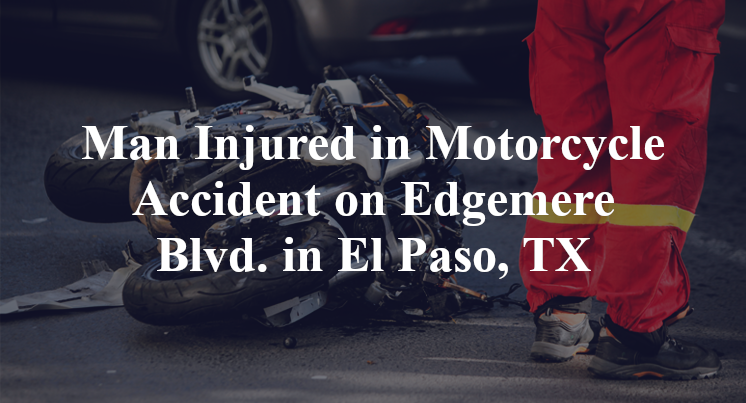
Officials indicate that, for as yet unknown reasons, the motorcycle failed to safely complete a left turn to head north on Nolan Richardson. It apparently struck a curb and lost control. The man reportedly sustained serious injuries as a result of the accident and was taken to a local medical facility in order to receive necessary treatment. Additional details pertaining to this incident—including the identity of the victim—are not available at this point in time.
Commentary by Attorney Michael Grossman
When a motorcyclist attempts a turn and ends up striking a curb, especially at night, it’s not enough to assume it was a simple case of overcorrection or inattention. The real question is whether anything about the bike, the rider’s inputs, or unseen contributing factors went overlooked.
1. Did the authorities thoroughly investigate the crash?
Crashes involving motorcycles often leave sparse evidence, but that makes what’s there all the more important. Did investigators measure the turning radius, document skid marks or gouges, or assess lighting and visual obstructions in the area? Even without another vehicle involved, mapping the bike’s trajectory could clarify whether the rider misjudged the turn—or whether something more sudden caused the loss of control. If the scene was only briefly surveyed and not fully documented, there’s a real chance critical context was missed.
2. Has anyone looked into the possibility that a vehicle defect caused the crash?
A failed turn at low speed might seem like rider error, but when a motorcycle loses control and hits a curb, it’s fair to ask whether the bike responded as expected. Could a brake imbalance, tire failure, or steering issue have disrupted the rider’s ability to control the turn? Even a worn steering head bearing or unstable suspension could contribute. Unless someone performed a post-crash mechanical inspection of the Honda, there’s no way to know if the bike itself played a role.
3. Has all the electronic data relating to the crash been collected?
Motorcycles today often come with digital tech—GPS tracking, ride data apps, or even optional dashcams—that can reveal speed, lean angle, and route data. If the rider was using a phone or helmet cam, that footage could help determine exactly how the turn unfolded. That kind of evidence can be essential in showing whether the bike’s movements were deliberate or the result of a sudden failure. But if that data hasn’t already been preserved, the chance to recover it may be slipping away.
Motorcycle crashes that happen during routine maneuvers are often the most misunderstood. Without thorough review, the real cause can stay buried under assumptions—and the chance to learn from what went wrong may disappear with it.
Key Takeaways:
- Even low-speed motorcycle crashes require detailed scene analysis to understand vehicle movement.
- Mechanical issues like brake or suspension problems should be considered in unexpected loss of control.
- GPS or onboard tech may hold valuable insights into the rider’s speed, path, and lean angle.

 call us
  Email Us
  Text us