
Lorain County, OH — June 22, 2025, One person was killed following an 18-Wheeler accident that occurred at around 2:25 P.M. on Route 113.
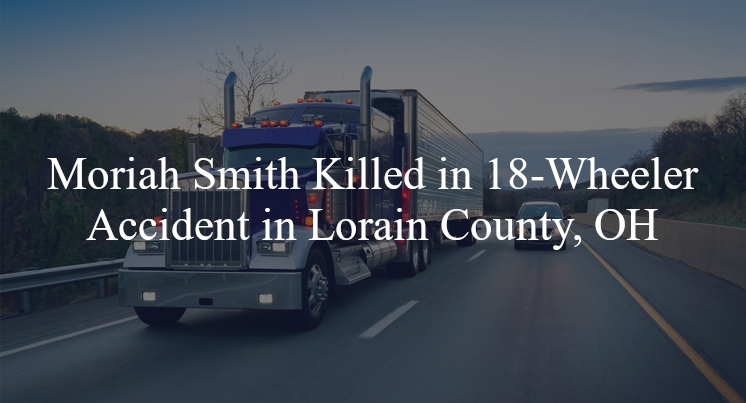
According to reports, a Ford Fusion operated by Moriah Smith was traveling on Gore Orphanage Road when for unknown reasons it failed to yield when turning onto Route 113 and was was struck by an 18-wheeler.
When first responders arrived on the scene they saw that semi had left the road after impact and struck a tree, and that a third vehicle was also involved in the collision. Smith sustained fatal injuries and she was pronounced deceased. It’s unknown if anyone else involved in the accident sustained injuries.
Commentary by Attorney Michael Grossman
When people hear that a passenger car was struck by an 18-wheeler after failing to yield, many are quick to assume the driver of the smaller vehicle was solely at fault. But from a legal standpoint, that’s not always the end of the story. Crashes like this one—at the intersection of Gore Orphanage Road and Route 113—require a deeper look at how each driver responded, and whether everyone involved was acting within the bounds of safety and law.
According to reports, the Ford Fusion failed to yield while turning and was struck by an oncoming semi-truck. After the impact, the 18-wheeler left the roadway and struck a tree, and a third vehicle was also involved. The driver of the Fusion died at the scene, and there’s no word yet on whether others were injured. What caused the Fusion to fail to yield is unknown—but that’s just one piece of the puzzle.
A Failure to Yield Doesn’t Automatically Settle Fault
Legally, failing to yield doesn’t mean the other driver is free of responsibility. The law also requires that commercial drivers maintain a proper lookout, travel at a safe speed for conditions, and do everything reasonably possible to avoid a collision—even when they have the right of way. That’s not just theory; it’s grounded in the real-world expectations of how professional drivers are trained and licensed.
Was the trucker speeding? Was there enough time to slow down or steer away? Did the driver anticipate the vehicle turning in front of them? These are the kinds of questions that only get answered through a proper investigation—using black box data, dash cam footage, and witness statements.
I’ve handled cases where a car clearly entered the path of a truck, but the truck was going well above the speed limit and hauling a load it shouldn’t have been moving that fast with. The result was a crash that could’ve been far less severe—or avoided entirely—if the trucker had been operating more responsibly. In court, that context matters.
A Third Vehicle Means More Questions
The involvement of a third vehicle further complicates the situation. Was that vehicle part of the initial impact or caught up in the aftermath? Did it contribute in some way to the Fusion’s actions or the truck’s response? Every vehicle in a multi-party crash plays a role in how liability gets sorted out.
The fact that the truck went off the road and hit a tree also raises mechanical questions. Did the driver lose control, or was the vehicle already in a compromised position after the impact? Reviewing ECM data can reveal whether the driver applied brakes, swerved, or reacted in time—or whether something failed in the process.
Key Takeaways
- Reports indicate the Fusion failed to yield before being hit by an 18-wheeler, but that doesn’t automatically assign full fault.
- Truck drivers are held to a higher standard and must take reasonable steps to avoid a crash—even when they have the right of way.
- Black box data, dash cams, and witness accounts are essential to understanding how the trucker responded and whether the crash was avoidable.
- The presence of a third vehicle complicates the incident and introduces more variables that must be investigated.
- A full and independent investigation is the only way to determine who should be held accountable and why.

 call us
  Email Us
  Text us