
Harris County, TX — March 7, 2025, Minh Nhan was injured in a motorcycle accident shortly before 12:30 a.m. along Sam Houston Parkway.
According to authorities, 28-year-old Minh Nhan was traveling on a northbound Honda motorcycle on Sam Houston Parkway in the vicinity south of Bissonnet Street when the accident took place.
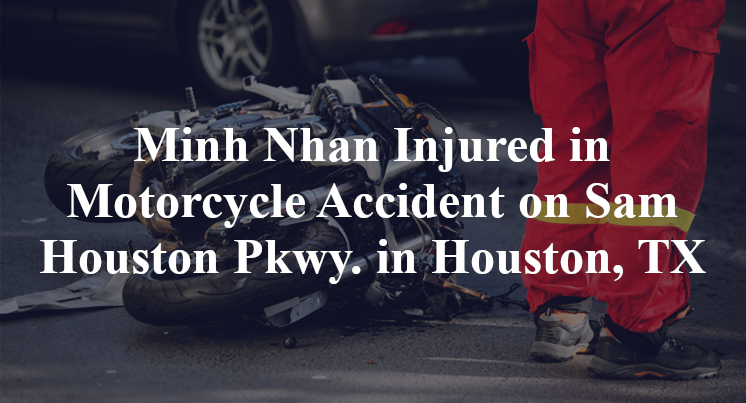
Officials indicate that, for reasons yet to be confirmed, the motorcycle was involved in a single-vehicle collision in which it apparently struck a concrete traffic barrier. Nhan reportedly sustained serious injuries as a result of the wreck. Additional details pertaining to this incident are not available at this point in time. The investigation is currently ongoing.
Commentary by Attorney Michael Grossman
When a motorcycle slams into a concrete barrier on a major parkway after midnight, the typical assumption is rider error. But that kind of surface-level thinking doesn’t help anyone understand what really happened—especially when serious injuries are involved.
1. Did the authorities thoroughly investigate the crash?
Motorcycle crashes can be deceptively complex. Did investigators look into whether the rider tried to brake or swerve before hitting the barrier? Were there any marks on the road that might suggest a sudden maneuver or loss of control? A full reconstruction should include those details, along with photographs of the barrier and motorcycle’s final resting position. If authorities skipped these steps, it raises doubts about how fully they explored the event.
2. Has anyone looked into the possibility that a vehicle defect caused the crash?
Motorcycles depend heavily on precision and balance—any mechanical glitch can spell disaster. Issues like a locked brake caliper, a sticking throttle, or a suspension failure could cause the kind of abrupt instability that leads straight into a barrier. Without a post-crash mechanical inspection of the Honda, there’s no way to rule out these contributing factors. A sudden loss of control might not have been the rider’s fault.
3. Has all the electronic data relating to the crash been collected?
While motorcycles generally capture less onboard data than cars, riders often use GPS trackers, phone apps, or helmet-mounted cameras. These can record speed, route, and sometimes even riding behavior leading up to a crash. If Minh Nhan was using any such device, that information could be key to understanding whether he was reacting to something unexpected—or if the bike itself failed. But that kind of data doesn’t stay accessible for long without active preservation.
Motorcycle crashes often get written off as misjudgments or inexperience. But when someone’s seriously hurt, the only fair response is to challenge assumptions and push for a deeper look into what might have gone wrong.
Key Takeaways:
- Motorcycle crashes should be reconstructed with a focus on vehicle path, braking, and obstacle avoidance.
- Mechanical failures—especially in the brake or throttle systems—should be ruled out with an inspection.
- GPS or camera data from the rider could clarify speed, behavior, and potential loss of control.

 call us
  Email Us
  Text us