
Clarksville, TX — July 7, 2025, a man was injured due to a single-vehicle truck accident shortly before 12:30 p.m. along Farm to Market 412.
According to authorities, a 56-year-old man from Midland was traveling in a northwest bound Western Star 18-wheeler with a trailer in tow on F.M. 412 in the vicinity south of U.S. Highway 82 when the accident took place.
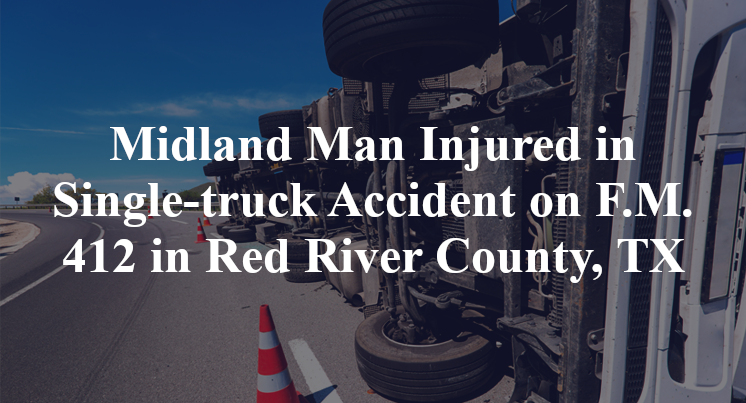
Officials indicate that, for reasons yet to be confirmed, the truck was involved in a single-vehicle collision in which it apparently overturned. The man reportedly sustained serious injuries over the course of the accident. Additional details pertaining to this incident—including the identity of the victim—are not available at this point in time. The investigation is currently ongoing.
Commentary by Attorney Michael Grossman
When an 18-wheeler overturns without any other vehicles involved, the most pressing question is what caused the loss of control? Trucks of that size don’t simply roll over on their own—something in the driver’s actions, the vehicle’s condition, or the load itself usually plays a role.
Several scenarios could explain what happened here. Did the driver enter a curve too fast and overcorrect? Was there a distraction inside the cab, or a medical issue that caused a lapse in control? Did shifting cargo or an unevenly loaded trailer destabilize the truck? Each of these possibilities points investigators toward a different kind of evidence.
The truck’s engine control module (ECM) should be pulled to see speed, braking, and steering inputs in the seconds leading up to the rollover. If the vehicle had in-cab cameras, those could confirm whether the driver was alert or reacting to something unexpected. Investigators should also look closely at cargo securement records—I’ve handled cases where improperly balanced or unsecured loads made a truck nearly impossible to control during normal maneuvers.
Mechanical issues are another angle that shouldn’t be overlooked. Brake problems, steering defects, or suspension failures can turn what should be a routine trip into a catastrophic rollover. A full inspection of maintenance logs and recent inspection reports will be key.
Finally, it’s important to consider whether company oversight contributed. Was the driver operating under tight delivery pressures that encouraged risky driving? Was he properly trained on handling a loaded rig in rural conditions? Those questions may not be answered in the initial report, but they often surface once records are reviewed in detail.
Right now, all we know is that the truck overturned and left the driver seriously injured. The “why” is still wide open, and it will take a thorough investigation—both of the vehicle and the company behind it—to bring the full picture into focus.
Key Takeaways
- The cause of the rollover is unknown; possibilities include driver input, cargo shift, distraction, or mechanical failure.
- ECM data, in-cab video, and cargo securement records are essential to reconstructing the event.
- A detailed inspection of brakes, steering, and suspension should be performed.
- Company training, scheduling, and oversight may have influenced the driver’s condition and decisions.
- Labeling this as a single-vehicle crash risks ignoring contributing factors beyond the driver alone.

 call us
  Email Us
  Text us