
Update (April 17, 2025): Authorities have identified the driver of the passenger car, a 2025 Kia Soul, as Donald Morgan Jr., 55.
Update (April 14, 2025): Authorities have identified the person who was killed in this accident as Lakisha Franklin-Morgan, 49, of Perry, FL. The name of the person who was injured in this crash still has not been made public.
Calera, AL — April 7, 2025, one person was killed and another was injured in a truck accident at about 8:20 p.m. on Interstate 65.
Authorities said a passenger car was involved in a crash with a semi-truck near mile marker 227.
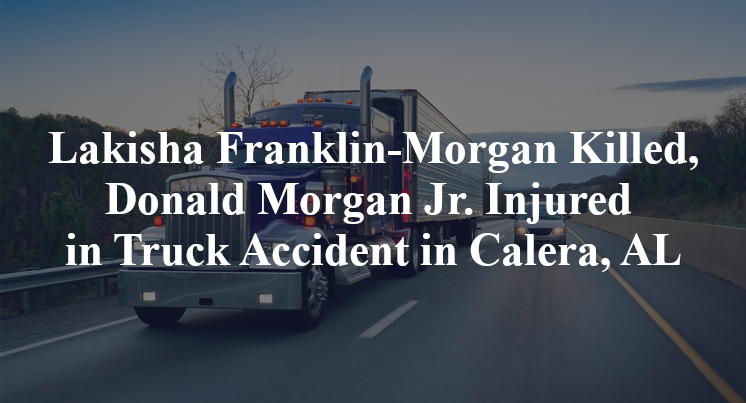
One person died in the crash and another was seriously injured, according to authorities. Their names have not been made public at this time.
Authorities have not released any additional information about the Shelby County crash. The accident is still under investigation.
Commentary by Attorney Michael Grossman
When a crash between a semi-truck and a passenger vehicle results in someone losing their life, the most important question isn’t just what happened, but why. Especially on a major highway like I-65, where both vehicles are likely traveling at high speed, even a small misstep by either party can have serious consequences. That’s why early assumptions don’t do much good—what matters is the evidence.
Right now, there’s no public information about how the crash occurred—whether it was a rear-end collision, a lane-change conflict, or a vehicle losing control. But any time a passenger car and a commercial truck collide, investigators have to look closely at the behavior and decisions of both drivers, starting with who had the responsibility to yield and whether either driver failed to follow the rules of the road.
From the truck driver’s side, that means checking speed, lane position, and awareness. Investigators should download the truck’s engine control module to learn whether the driver braked or steered before the crash and how fast the vehicle was moving. If the truck had a dashcam, that footage could help determine whether the car made a sudden move or if the truck driver failed to react in time.
At the same time, the passenger vehicle’s condition and position at the time of the crash may offer clues. Was the driver merging, stopped, or making a lane change? Were there visibility issues due to weather or lighting? Did the vehicle have a mechanical issue that contributed to the collision?
It’s also worth considering whether the truck driver was dealing with fatigue, distraction, or pressure to meet a tight delivery schedule. I’ve seen cases where those factors don’t just lead to poor decision-making—they’re baked into how the trucking operation is run. If that’s the case here, the responsibility could go beyond the individual behind the wheel.
Right now, the facts are limited, and that’s exactly why a thorough investigation matters. This isn’t about speculation—it’s about determining who had the opportunity to prevent the crash and whether they acted on that responsibility. Because when a crash involves a commercial truck and ends in loss of life, the law expects a clear answer to the question: Was this preventable? And if it was, someone needs to be held accountable.

 call us
  Email Us
  Text us