
Fairfield County, SC — June 24, 2025, Kathleen Hodge was killed in a truck accident at about 1:30 p.m. on Interstate 77 east of Winnsboro.
Authorities said a 2006 Harley-Davidson motorcycle apparently lost control near mile marker 46, hitting a guardrail on the right side of the highway before crashing into a 2025 Freightliner semi-truck.
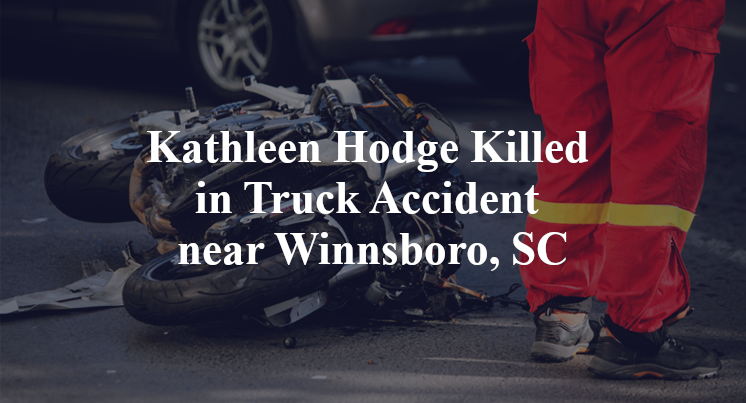
Motorcyclist Kathleen E. Hodge, 60, of Darlington was pronounced dead at the scene of the crash, according to authorities.
No other injuries were reported.
Authorities have not released any additional information about the Fairfield County crash at this time. The accident is still under investigation.
Commentary by Attorney Michael Grossman
When someone dies in a crash involving a motorcycle and a semi-truck, people naturally want to know what went wrong, and who’s responsible. But in a situation like this, where the motorcycle reportedly lost control and collided with the side of a semi, we’re left with more questions than answers.
According to the available details, the motorcyclist hit a guardrail before colliding with the truck. That description raises an immediate and critical question: Was the truck already in motion in the same lane, or was it stopped or changing lanes when the motorcycle struck it? Depending on the truck’s position and behavior, entirely different liability scenarios could come into play.
It’s easy to assume that if someone loses control of their motorcycle, the crash must be their fault. But that’s not how these cases work in the real world. Before anyone can truly understand what happened, a proper investigation needs to answer a few key questions:
- Was the truck driving in a consistent manner and within its lane?
- Did the truck driver take any evasive action, and if not, should they have?
- Was the truck moving slowly, recently merged or stopped on the highway shoulder?
- Were there any visibility issues or road conditions contributing to the incident?
These aren’t idle curiosities. They’re the kinds of questions black box data, dash cam footage and scene evidence can help clarify. Most modern trucks record vehicle speed, braking, steering inputs and even lane tracking, all of which could shed light on the truck’s behavior in the seconds before impact.
Then there’s the human side of the equation. We don’t yet know if the truck driver saw the motorcycle losing control. Did they react appropriately? Did their actions contribute to the severity of the crash? The only way to know is through a thorough review of in-cab cameras, ECM data and the driver’s background. Was the driver properly trained and fit for duty? Did they follow protocol?
In one of my past cases, we found that a trucking company had skipped key parts of its hiring process. The driver shouldn’t have been on the road at all, and once that became clear, it shifted the focus of the case entirely. That’s why it’s not enough to take initial reports at face value. You have to dig.
Key Takeaways:
- It’s not yet clear what role the semi-truck’s position or movement played in the crash.
- Black box and dash cam data can provide critical context for both vehicles’ behavior.
- The trucking company’s hiring and training practices may come under scrutiny depending on what’s revealed.
- Initial impressions can be misleading. Only a full investigation will show where accountability truly lies.

 call us
  Email Us
  Text us