
Spencerville, IN — April 29, 2025, Kaiya Bontrager was killed and another person was injured in a truck accident at about 9:30 a.m. on State Road 101/Hall Road.
Authorities said an SUV was heading west on Campbell Road when it was hit by a semi-truck while crossing Hall Road.
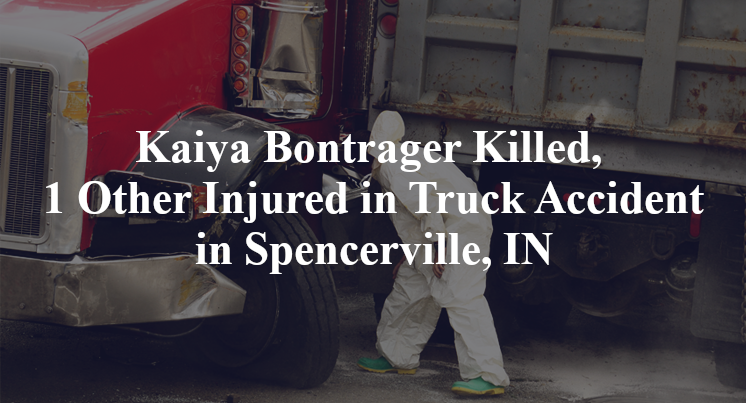
SUV driver Kaiya Elle Bontrager, 19, died in the crash, while the truck driver suffered serious injuries, according to authorities.
Authorities have not released any additional information about the Allen County crash at this time. The accident is still being investigated.
Commentary by Attorney Michael Grossman
When a crash occurs at a rural intersection between an SUV and a semi-truck, as happened here at Campbell Road and Hall Road, the core legal issue is right-of-way, and whether both drivers had a clear opportunity to avoid the collision. These types of intersections often lack traffic signals or turn lanes, placing a heavier burden on drivers to judge cross traffic accurately. But for a commercial truck driver, the burden goes further: they’re expected to anticipate hazards and act with an abundance of caution, especially in areas where traffic patterns are unpredictable.
From the limited information available, it appears the SUV was crossing Hall Road when it was struck by the truck. That raises questions about line of sight, speed and whether either vehicle could have reasonably avoided the crash. Did the SUV pull out too soon? Was the truck approaching too fast for the conditions? Was visibility obstructed by trees, curves or terrain? These are not just investigative details. They’re the foundation of any determination of fault or preventability.
For the truck driver, even if they had the legal right-of-way, the law still requires them to maintain a proper lookout and to adjust speed when approaching known intersections, especially in areas with limited signage or where local traffic may be familiar but unpredictable. That’s part of the professional obligation that comes with operating a vehicle that can take several hundred feet to stop and can turn a momentary mistake into a life-altering event.
The fact that the truck driver was also seriously injured suggests the impact was severe and may help investigators piece together relative speeds and angles. But the greater concern is whether this intersection offered either driver a fair chance to avoid the collision. In too many rural crashes, outdated or poorly designed intersections contribute to split-second decisions with no margin for error.
Ultimately, this crash represents a tragic intersection of inexperience, mass, and missed opportunity. A woman lost her life, and the commercial driver was seriously injured. The question now is whether either had a clear and lawful opportunity to prevent what happened, or whether conditions at that intersection made a deadly outcome almost inevitable. Either way, the lessons from this crash need to inform not just accountability, but how drivers and planners treat crossings where high-speed traffic and local roads converge. Because those are the places where lives are most often lost when judgment fails or safety design comes up short.

 call us
  Email Us
  Text us