
Victoria County, TX — June 10, 2025, Justin McKay was injured as the result of a semi-truck accident that happened around 7:15 p.m. along US Highway 77.
According to initial details about the accident, it happened a few miles south of Victoria near TX-239.
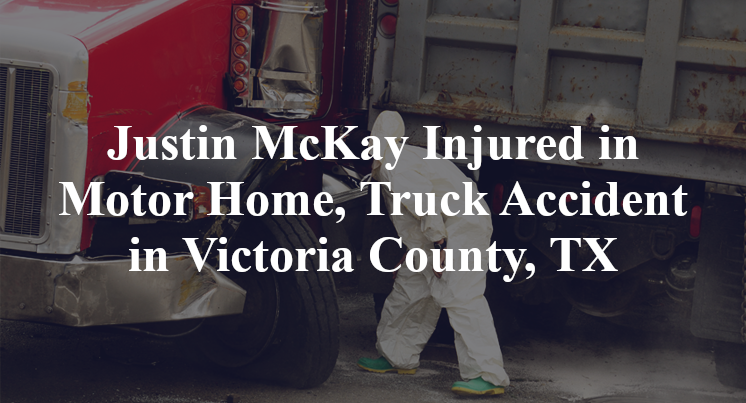
Investigators said that 37-year-old Justin McKay was in a Winnebago going northbound on US 77/I-69E. A Peterbilt 18-wheeler was going northbound, as well. Authorities claim the semi-truck failed to control speed, crashing into the motor home.
Justin McKay reportedly sustained serious injuries as a result of the accident. There were no other confirmed injuries. At this time, additional details are unavailable.
Commentary by Attorney Michael Grossman
When a semi-truck fails to control its speed and crashes into the back of another vehicle, it’s a strong sign that something went wrong in a situation where the outcome should have been avoidable. But while the surface-level mistake might be clear, the bigger concern is what led to that failure in the first place.
Speed control isn’t optional for commercial drivers. These vehicles require longer distances to stop, and their weight and size mean that the risk of serious injury goes up fast. But in my experience, what causes a truck driver to misjudge speed or spacing is often more about their working conditions than just a bad decision in the moment.
Was the driver fatigued after too many hours on the road? Were they rushing to meet an unreasonable delivery window? Were their brakes worn and needing to be replaced? Were they distracted by their phone or other equipment? Did the driver have any history of reckless behavior in the past? Had they been adequately trained, or were they an inexperienced hire that was rushed through the onboarding process?
These are the kinds of questions that need answers, and doing so generally requires more thorough investigations than basic police reports typically offer. Engine control module (ECM) data, dash cam footage, and driver logs can help confirm what the driver was doing before the crash. Digging into whether the trucking company’s policies and scheduling practices contributed to an unsafe situation is also important. Not only can this all be key for seeing there are consequences for the crash, but also it could help prevent other crashes in the future.
Key Takeaways
- A reported failure to control speed by a semi-truck raises concerns about what conditions led to that mistake.
- Speed and spacing are critical responsibilities for commercial drivers, especially around vulnerable vehicles like motor homes.
- Investigators should examine ECM data, dash cams, and driver logs to determine the full context.
- Company policies around scheduling, driver fatigue, and delivery pressure often contribute to crashes like this.
- Accountability requires looking beyond the driver to the system that shaped their decisions on the road.

 call us
  Email Us
  Text us