
Abilene, TX — May 4, 2025, John Thomas Bell was killed in a motorcycle accident at around 6:30 p.m. along South Treadaway Boulevard.
According to authorities, 37-year-old John Thomas Bell, of Abilene, was traveling on a motorcycle on South Treadaway Boulevard (Business Highway 83) near the South 14th Street intersection when the accident took place.
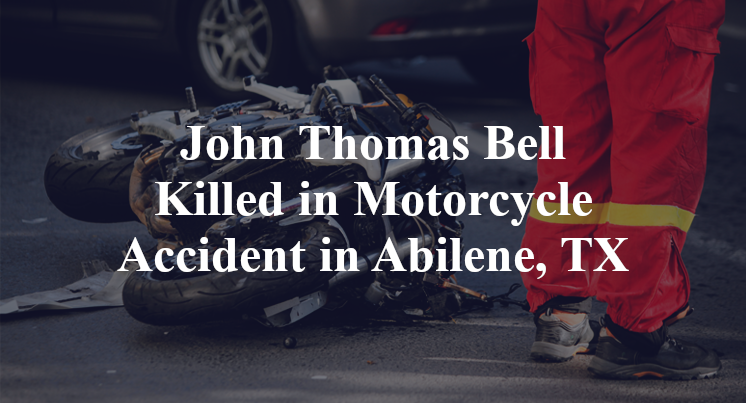
Details surrounding the accident remain scarce. Officials indicate that, for reasons yet to be confirmed, the motorcycle was involved in a single-vehicle collision in which it apparently overturned. Bell reportedly suffered fatal injuries over the course of the accident. Additional details pertaining to this incident are not available at this point in time. The investigation is currently ongoing.
Commentary by Attorney Michael Grossman
When a motorcyclist loses their life in a single-vehicle crash—especially under ordinary daylight conditions, as reportedly occurred in the case of John Thomas Bell in Abilene—it’s tempting for many to assume that the rider must have simply lost control. But after years of working with families affected by serious wrecks, I’ve learned that those assumptions are not only premature—they’re often wrong. In order to truly understand what happened, and to give those affected the clarity they deserve, three critical questions must be asked.
First, did investigators conduct a detailed analysis of the crash scene and surrounding environment? South Treadaway Boulevard is a well-traveled roadway, but any street can pose unexpected hazards. Was there debris in the roadway, such as gravel or vehicle parts? Were there visibility issues, faded road markings, or confusing signage near the South 14th Street intersection? Was Mr. Bell possibly reacting to another vehicle’s actions? Investigators should have carefully documented the scene, measured skid marks or yaw patterns, and sought out any available surveillance footage from nearby businesses to reconstruct the rider’s path.
Second, has anyone considered whether a mechanical issue with the motorcycle may have contributed to the crash? Motorcycles, especially performance-oriented models, are particularly sensitive to failures in steering, braking, tires, or suspension. If something failed—either due to wear, a manufacturing defect, or poor maintenance—Mr. Bell may have lost control despite taking all reasonable precautions. These types of failures are rarely visible at the roadside. A forensic inspection is necessary and must take place before the motorcycle is repaired, scrapped, or otherwise altered.
Finally, has all relevant electronic or digital evidence been pursued? While not all motorcycles are equipped with black box systems, many riders use helmet cams, smartphone ride-tracking apps, or GPS devices that record valuable data. These sources can help establish speed, location, braking behavior, and even road conditions at the time of the crash. Additionally, any traffic or security camera footage from the area could shed light on nearby vehicles, lighting, and road usage patterns—factors that may have influenced the outcome.
Answering these three questions is critical to making sure that no stone is left unturned in understanding the causes of a crash like this. Serious wrecks deserve serious investigation, not assumptions. Getting clear answers to these questions is crucial for those seeking to understand what happened and why—and it’s the least that can be done to help those affected find the clarity and closure they deserve.

 call us
  Email Us
  Text us