
Galveston County, TX — September 3, 2024, John Haskel Jr. was injured in a motorcycle versus car accident shortly before 8:00 p.m. along Spur 342.
According to authorities, 55-year-old John Haskel Jr. was traveling on a southbound Harley-Davidson motorcycle on Spur 342 in the vicinity south of Central City Boulevard when the accident took place.
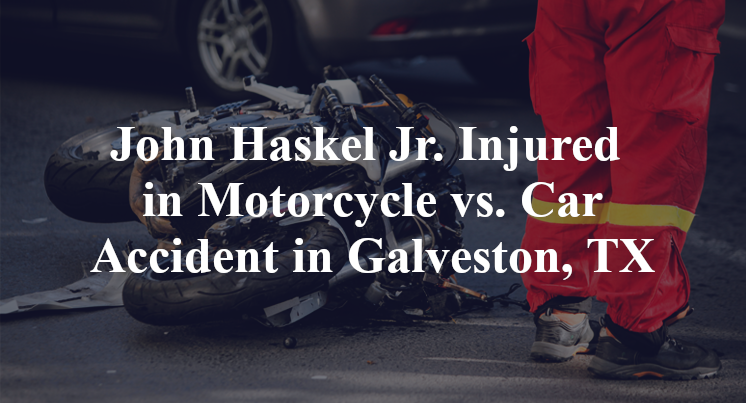
Officials indicate that, for as yet unknown reasons, an eastbound Ford F-150 pickup truck on a private drive attempted to enter the roadway at an apparently unsafe time, failing to yield the right-of-way. A collision consequently took place between the front-end of the pickup truck and the back-right side of the motorcycle. Haskel reportedly suffered serious injuries due to the wreck. Additional details pertaining to this incident are not available at this point in time.
Commentary by Attorney Michael Grossman
When a motorcyclist is seriously injured in a crash involving a vehicle entering from a private drive, as appears to be the case with John Haskel Jr., it’s tempting to assume that the fault lies entirely with the driver who failed to yield. But in my experience, understanding the why behind that failure is what truly matters. To uncover the full truth and ensure accountability, we must begin by asking three key questions that often reveal overlooked or misunderstood elements in serious wrecks like this.
First, did investigators thoroughly examine the scene to determine why the driver failed to yield? Entering a major roadway like Spur 342 from a private drive comes with unique challenges—limited visibility, unclear signage, or even poor road design can all play a role. Was the F-150 driver able to see oncoming traffic clearly? Were there environmental factors like dusk lighting, foliage, or building obstructions that may have contributed? Without properly documenting these conditions and evaluating whether the scene itself played a role, a critical part of the picture could be missing.
Second, has anyone explored whether a mechanical issue with either vehicle contributed to the crash? A failure in the Ford F-150’s brakes or steering system could have delayed or prevented the driver’s attempt to yield, turning a misjudgment into an unavoidable collision. On the motorcycle side, if there were issues with braking, stability, or lighting, that could have affected both Mr. Haskel’s ability to avoid the crash and the driver’s ability to see him. These types of mechanical failures often require a forensic inspection and can’t be diagnosed from a visual assessment at the scene alone.
Finally, has all relevant electronic and digital data been collected? While motorcycles generally don’t come standard with event data recorders, some newer models or connected accessories might capture speed, braking, and even location data. The Ford F-150, however, likely does have a black box system capable of logging throttle input, braking, and steering data just prior to impact. Investigators should also seek out any local surveillance footage, dashcams, or GPS/cell phone records that can help reconstruct the crash. Even a few seconds of footage or digital breadcrumbs can dramatically change the understanding of what took place.
Answering these three questions is critical to making sure that no stone is left unturned in understanding the causes of a crash like this. Serious wrecks deserve serious investigation, not assumptions. Getting clear answers to these questions is crucial for those seeking to understand what happened and why—and it’s the least that can be done to help those affected find the clarity and closure they deserve.

 call us
  Email Us
  Text us