
El Paso County, TX — November 30, 2024, Jerry Gutierrez was injured in a motorcycle versus car accident at approximately 1:00 a.m. along Lee Trevino Drive.
According to authorities, 32-year-old Jerry Gutierrez was traveling on a westbound Honda motorcycle on Pellicano Drive at the Lee Trevino Drive intersection when the accident took place.
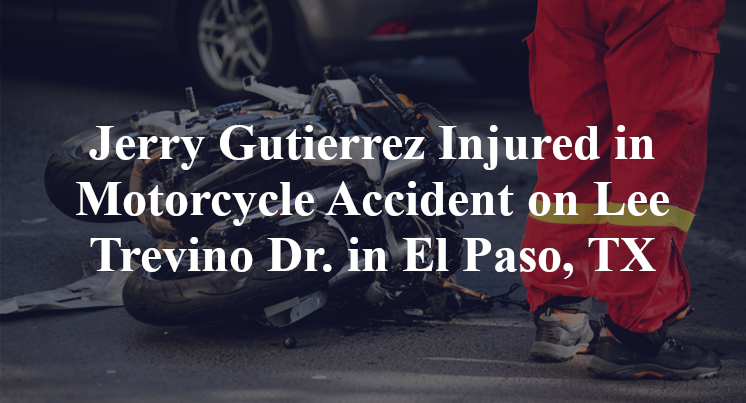
The intersection is apparently controlled by a traffic signal. Officials indicate that, for as yet unknown reasons, the motorcycle attempted a left turn to head south on Lee Trevino despite a red light. This resulted in a collision between the motorcycle and a southbound Nissan Rogue.
Gutierrez reportedly suffered serious injuries over the course of the accident. It does not appear that anyone else was harmed. Additional details pertaining to this incident are not available at this point in time. The investigation is currently ongoing.
Commentary by Attorney Michael Grossman
When I see reports like this, my main concern is whether Jerry Gutierrez and his loved ones will get the answers they need about what happened. Intersection crashes involving motorcycles are often complex, and while early reports suggest a red-light violation, experience has shown me that there’s often more to the story than meets the eye. That’s why it’s critical to examine three key questions when looking into any serious accident.
The first question is whether authorities have conducted a thorough investigation. Law enforcement will likely document the scene, but key details can sometimes be overlooked. Were the traffic signals functioning properly at the time of the crash? Were visibility issues—such as poor lighting or obstructions—affecting either driver’s ability to see the signal? Did officers have the time and resources to fully reconstruct the accident? Answering these questions is crucial to ensuring an accurate understanding of what happened.
The second question to consider is whether anyone has looked into the possibility of a vehicle defect. Motorcycles are particularly vulnerable to mechanical failures, including brake malfunctions, throttle issues, or electrical problems that might cause a rider to misjudge stopping distance or acceleration. If Gutierrez’s motorcycle experienced a defect that made it difficult to stop or navigate the turn safely, that could be a crucial factor in understanding the crash. Unfortunately, vehicle defects are often overlooked unless someone specifically requests further investigation. A forensic examination of the motorcycle could help determine whether a defect played a role.
Finally, it’s important to determine whether all relevant electronic data has been collected. While motorcycles do not always have extensive onboard data storage, some models do record limited performance data that could provide insights into speed or braking before the crash. Additionally, nearby surveillance cameras or traffic cameras at the intersection may provide crucial visual evidence of what happened. Even cellphone data could be relevant if distraction or another external factor played a role. Securing this evidence quickly is essential to preserving a full and accurate understanding of the accident.
At the end of the day, answering these questions could be essential to understanding what really happened and why. A thorough examination of all three of these issues—including the quality of police investigations, possible vehicle defects, and electronic data—is the least that can be done to ensure that those affected by the crash receive the clarity they deserve.

 call us
  Email Us
  Text us